
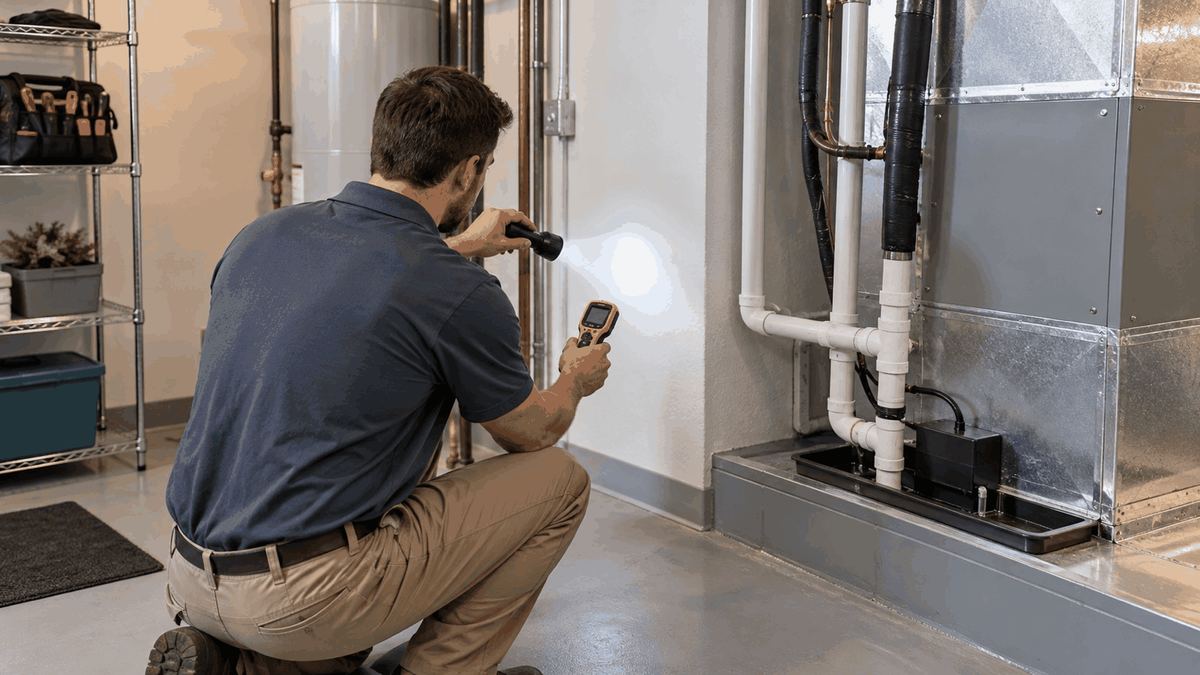
Housekeeping teams can help prevent mold complaints by documenting moisture clues around bathrooms, laundry rooms, and wet areas before small problems spread.
Why These Rooms Need Attention
Bathrooms and laundry rooms combine water, heat, plumbing connections, fans, and repeated cleaning. A room can look tidy while a slow leak, blocked exhaust path, loose seal, or wet material is creating a condition that needs attention. Housekeepers are often among the first people to notice a new odor, a damp baseboard, condensation, a stained ceiling, or a floor that does not dry normally.
Their role is not to diagnose every building problem or promise that a room is free of mold. Their role is to notice, document, protect the area when appropriate, and route the issue to the property or facilities team. A consistent response helps managers see patterns and decide when a qualified inspection, repair, or remediation process is needed.
Common Mistakes and Misconceptions
Clean does not always mean dry
Cleaning removes soil from a surface, but it does not correct a leak or dry a wall cavity. A strong fragrance can also mask an odor without changing the underlying condition. Housekeeping checklists should separate cleaning completion from moisture observations and maintenance follow-up.
A spot does not identify the whole problem
Dark staining, discoloration, or a musty odor can have several causes. Staff should not scrape, sample, or disturb suspect material unless the employer's procedure and training specifically authorize that work. They should record what they see, where it is, when it was found, and who was notified.
There is no universal federal mold threshold
EPA notes that no federal limits have been set for mold or mold spores in indoor air. That does not make moisture unimportant. It means a property should use a practical moisture-control and response process rather than relying on a single number to declare a space safe. State and local requirements, leases, building policies, and professional advice may also affect the response.
What Housekeeping Teams Should Check
Bathrooms
Look at the area around toilets, sinks, tubs, showers, supply lines, shutoff valves, and floor transitions. Note standing water, soft flooring, swollen trim, failed caulk, dripping fixtures, loose escutcheons, or a ceiling stain below another unit. Check whether the exhaust fan operates when the room is in use and report unusual noise, weak airflow, or a fan that does not run.
Avoid moving heavy fixtures or opening finished surfaces. If water is active, follow the property emergency procedure and notify the designated contact promptly. A photo can help if it is taken safely and does not expose private information. Record the room number or asset identifier according to the property's privacy and work-order policy.
Laundry rooms
Check around washing machine hoses, drain connections, floor drains, utility sinks, supply valves, and dryer areas. Look for lint buildup that could affect equipment operation, condensation, damp walls, puddling, and materials stored directly on the floor. Report a drain that backs up, a hose that moves during operation, or a machine that leaves water after a cycle.
Housekeepers should not assume that a dry floor at the end of a shift proves the room is functioning correctly. Intermittent leaks may occur only when a machine fills or drains. A brief note about timing can be more valuable than a general statement that the room looked wet.
Adjacent spaces
Moisture may travel beyond the room where it begins. Check the baseboard on the other side of a bathroom wall, the ceiling below a laundry room, nearby closets, and the floor around a mechanical chase when those areas are part of the assigned route. Look for changes in odor, paint, flooring, or trim. Report related locations together so facilities staff can evaluate the path rather than repairing only the first visible mark.
How Training Helps
Mold prevention training for housekeeping teams should explain moisture sources, early warning signs, safe documentation, escalation paths, and boundaries. Staff can learn how to distinguish a routine cleaning task from a condition that requires a work order or supervisor review. They can practice writing an observation that is specific without making an unsupported diagnosis.
The moldtraining.us Mold Awareness Training course can be a natural starting point for employees who need basic awareness of moisture, indoor conditions, and prevention. Courses provide certificates of completion, but they do not guarantee licensure or authorize every type of inspection, testing, removal, or remediation work. Employers should direct workers to the applicable state and local requirements and define which tasks are allowed under the property's procedures.
Practice the handoff
Training should include a simple handoff: location, visible condition, possible water source, time observed, immediate action, person notified, and work-order or incident number. If occupants are present, staff should use respectful language and avoid promising a repair date or health outcome. The property manager or designated professional can explain next steps.
Keep prevention routine-based
Prevention works best when it is built into ordinary routes. A checklist can prompt staff to notice bathrooms after cleaning, laundry rooms after busy periods, and rooms below plumbing or roof work. The checklist should not turn housekeepers into inspectors. It should help them recognize when a normal task has revealed a building condition that needs a different response.
Frequently Asked Questions
Should a housekeeper test a suspected mold area?
Usually the first step is observation and reporting, not informal testing. Follow the employer's written process and use qualified personnel when an inspection, sampling, or remediation decision is needed.
What should be reported immediately?
Report active leaks, sewage or drain backups, significant standing water, electrical hazards, ceiling damage, rapidly spreading wet materials, or conditions that could expose people to an unsafe area according to the property's emergency procedure.
Is a musty odor proof of mold?
No. It is a clue that should be documented and evaluated with other observations. Odor alone does not identify a source or establish a health conclusion.
How fast should wet materials be addressed?
Promptly. EPA guidance emphasizes controlling moisture and drying water-damaged materials quickly. The responsible property or facilities team should determine the appropriate response based on the material, amount of water, source, and local requirements.
Do certificates of completion equal a license?
No. A course certificate shows completion of that course. It does not guarantee licensure and does not replace state or local requirements for inspection, assessment, removal, or remediation work.
Brief Conclusion
Housekeeping teams provide valuable early information when they are trained to notice moisture clues and document them consistently. A clean room can still need a plumbing, ventilation, envelope, or facilities response. The practical goal is to shorten the path from observation to responsible action while keeping diagnosis and regulated work with the appropriate people.
Use the property's checklist, protect privacy, report active water promptly, and keep the record factual. Review the process after recurring complaints or repeated work orders so managers can improve routes, maintenance, and training. Moisture control is an ongoing building practice, not a one-time promise.
Make the process easy to use
The best checklist is short enough to use and specific enough to route the next action. Include the room, observed condition, likely water source if known, photo or work-order reference, and notification time. Review recurring entries with maintenance staff so the property can address patterns such as repeated leaks, poor exhaust, or delayed drying.
Managers can reinforce the routine by reviewing a few completed entries each month with housekeeping and maintenance. Look for missing locations, vague descriptions, delayed notifications, and recurring conditions that were reported several times without a documented next step. This review is not a mold diagnosis. It is a way to see whether the property's moisture-response process is understandable, usable, and connected to the people who can investigate or repair the source.
Sources U.S. EPA, A Brief Guide to Mold, Moisture and Your Home, https://www.epa.gov/mold/brief-guide-mold-moisture-and-your-home; U.S. EPA, Moisture Control Guidance for Building Design, Construction and Maintenance, https://www.epa.gov/indoor-air-quality-iaq/moisture-control-guidance-building-design-construction-and-maintenance-0; U.S. EPA, Office Building Occupant's Guide to Indoor Air Quality, https://www.epa.gov/indoor-air-quality-iaq/office-building-occupants-guide-indoor-air-quality