
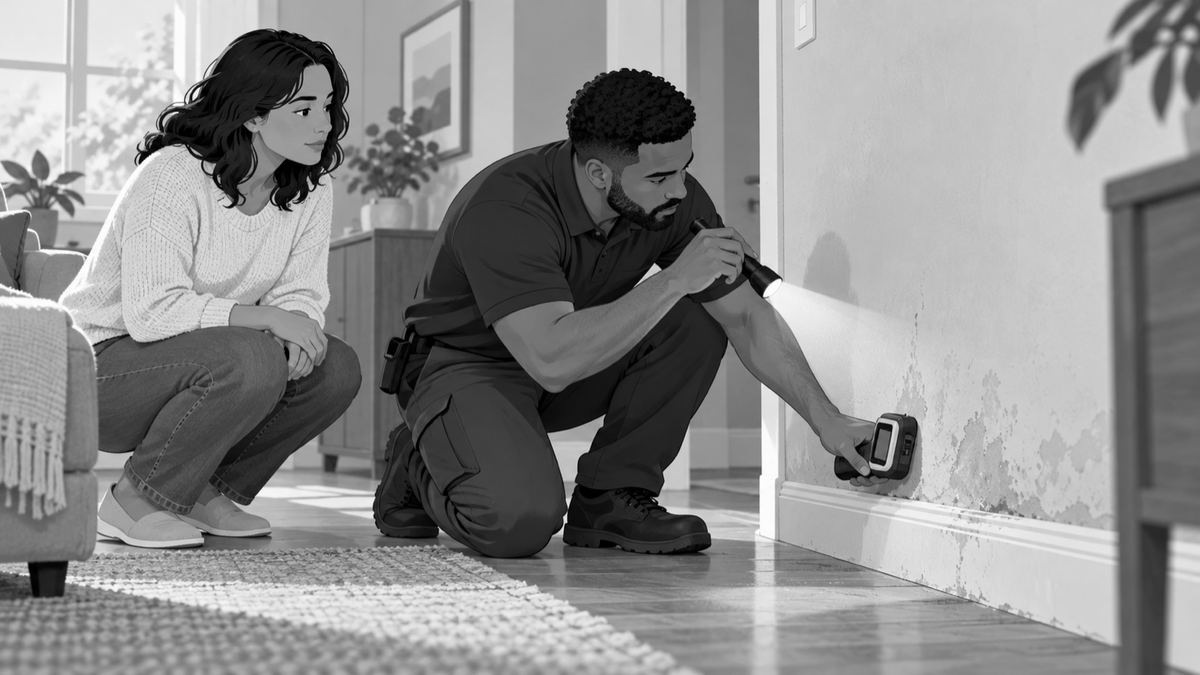
Resident-services teams can reduce confusion by documenting what occupants report, what staff observe, and what follow-up the property assigns.
Why Moisture Conversations Matter
Resident-services staff are often the first people to hear about a musty odor, a damp cabinet, a ceiling stain, condensation, or a recurring bathroom concern. They may not inspect the building envelope or perform remediation, but their intake can shape everything that follows. A clear first record gives maintenance and management a useful starting point without turning an initial report into a diagnosis.
During occupancy, the same concern may be described in different ways by a resident, leasing staff member, maintenance technician, and vendor. Training helps the team preserve the original facts while asking practical questions. When did the concern begin? Where is it located? Is it visible after rain, bathing, cooking, or HVAC operation? Has anyone already cleaned, painted, moved furniture, or used a dehumidifier? Has the condition changed?
The purpose is moisture response and communication. It is not to promise a health outcome, assign blame, or announce that a building has a mold condition based only on an odor or stain. A thoughtful record supports the next qualified inspection and helps the property coordinate access, maintenance, drying, repair, and follow-up.
Common Questions During Occupancy
What should the first report include?
Capture the date, unit or room, exact location, description in the resident's words, photographs when appropriate, and any immediate water source. Record whether the resident reports a leak, condensation, odor, visible growth, damaged materials, or a change after a recent repair. Ask whether the area is accessible and whether there are urgent conditions such as active water entry, electrical concerns, or a ceiling that appears unstable.
Should staff identify mold from a photograph?
No. A photograph can document appearance and location, but it does not establish the cause or identity of a substance. Staff should describe what is visible and route the concern according to the property's inspection and maintenance process. The record should avoid unsupported labels and medical conclusions.
What if the resident reports symptoms?
Listen respectfully and document the concern without diagnosing it. Encourage the resident to seek appropriate medical advice for health questions and follow the property's communication protocol. The maintenance record should stay focused on building conditions, moisture sources, access, and actions taken.
How quickly should a team respond?
The appropriate response depends on the condition, the property process, and local requirements. Active leaks, sewage, flooding, electrical hazards, or unsafe ceiling conditions may need immediate escalation. A non-urgent odor or stain still deserves a documented next step. The record should show who received the report, who was assigned, and what follow-up was scheduled.
What does training provide?
The relevant moldtraining.us course can provide structured education for property and maintenance teams on moisture awareness, documentation, prevention, and response roles. Courses provide certificates of completion and do not guarantee licensure. Employers should direct staff to state and local requirements for any inspection, remediation, or professional practice.
How Training Helps
Training gives resident-services teams a shared vocabulary. Staff can distinguish a report from an observation, an observation from an inspection finding, and a maintenance action from a remediation decision. That distinction reduces overstatement and helps the property hand a complete record to the person responsible for the next step.
A useful exercise is to give the team three sample calls. One resident reports a musty smell after rain. Another reports a dark mark under a sink. A third reports condensation around a supply register. Ask participants to record the location, timing, moisture source, visible condition, access needs, immediate safety concerns, and escalation path. The exercise should end with a clean handoff, not a diagnosis.
Training also supports prevention. Teams can learn to ask about recurring leaks, blocked exhaust fans, furniture against exterior walls, failed caulking, HVAC drainage, and areas where condensation is common. These questions do not replace an inspection, but they can help the property identify patterns before a small moisture concern becomes a larger repair.
Supervisors can use the course concepts during onboarding and refresher meetings. A short review of completed work orders can show whether staff captured the source, affected materials, drying steps, photographs, access, and follow-up. When records are incomplete, the response should be coaching and process improvement rather than automatic blame.
Moisture Documentation Workflow
Start with intake. Use the resident's words for the concern and add a neutral staff summary. Note whether the report is new, recurring, or associated with a known repair. Confirm the unit, room, wall or ceiling location, and any nearby plumbing or HVAC equipment. Ask permission and coordinate access according to the property's policy.
Next, triage for urgency. Active water, sewage, electrical exposure, structural damage, or unsafe access should be escalated through the emergency process. For other reports, assign a qualified maintenance or inspection response. Do not ask resident-services staff to perform work outside their training or authority.
During the visit, document observations and actions. Record moisture readings when a trained person uses an appropriate instrument, but do not treat one reading as a complete building assessment. Note visible damage, odor, temperature or humidity information when available, suspected source, affected materials, and the steps used to stop or contain water. Photograph before and after conditions when permitted.
Close the loop with the resident and management. Record what was communicated, what remains pending, who owns the next action, and when the property will check back. If a vendor or specialist is engaged, include the handoff date and scope without implying that a certificate or course replaces professional judgment.
Common Mistakes and Misconceptions
One misconception is that a musty odor alone proves the presence of mold. Odor may signal moisture or another condition, but it does not identify a source. Another is that painting over a stain resolves the underlying issue. If water entry or condensation continues, the condition can return and the record may hide the history.
Teams should avoid promising that a single cleaning, air test, or product will solve every concern. The right response depends on the source, materials, extent, access, and applicable property process. Staff should avoid quoting federal mold thresholds because no universal federal threshold tells a property when an indoor space is safe.
Another mistake is leaving the resident's report disconnected from the work order. The work order should carry the location, timing, source clues, and requested follow-up. A brief note that says resident called about mold is less useful than a factual record of where the concern was seen, what moisture was present, and what action was assigned.
Finally, do not treat a course certificate as a license. Moldtraining.us courses provide certificates of completion, but they do not guarantee licensure. Staff and employers should check state and local requirements for inspection, assessment, remediation, construction, and related work.
A Practical Course CTA
Property managers can use the relevant moldtraining.us course as a starting point for a resident-services refresher. The team can complete the course, discuss the property's escalation path, and practice turning a resident conversation into a useful moisture record. The goal is consistent communication and earlier attention to building conditions, not a promise of a particular inspection or health result.
Conclusion
Resident-services teams influence mold prevention before a specialist arrives. When they ask calm, specific questions and record moisture clues without diagnosing, they help maintenance and management act on better information. Training provides a repeatable foundation, while the property's procedures and state or local requirements determine the next professional step.
Sources
U.S. Environmental Protection Agency, Ten Things You Should Know About Mold - https://www.epa.gov/mold/ten-things-you-should-know-about-mold
U.S. Environmental Protection Agency, Improving Your Indoor Environment - https://www.epa.gov/indoor-air-quality-iaq/improving-your-indoor-environment
U.S. Environmental Protection Agency, Mold Course Chapter 9 - https://www.epa.gov/mold/mold-course-chapter-9