
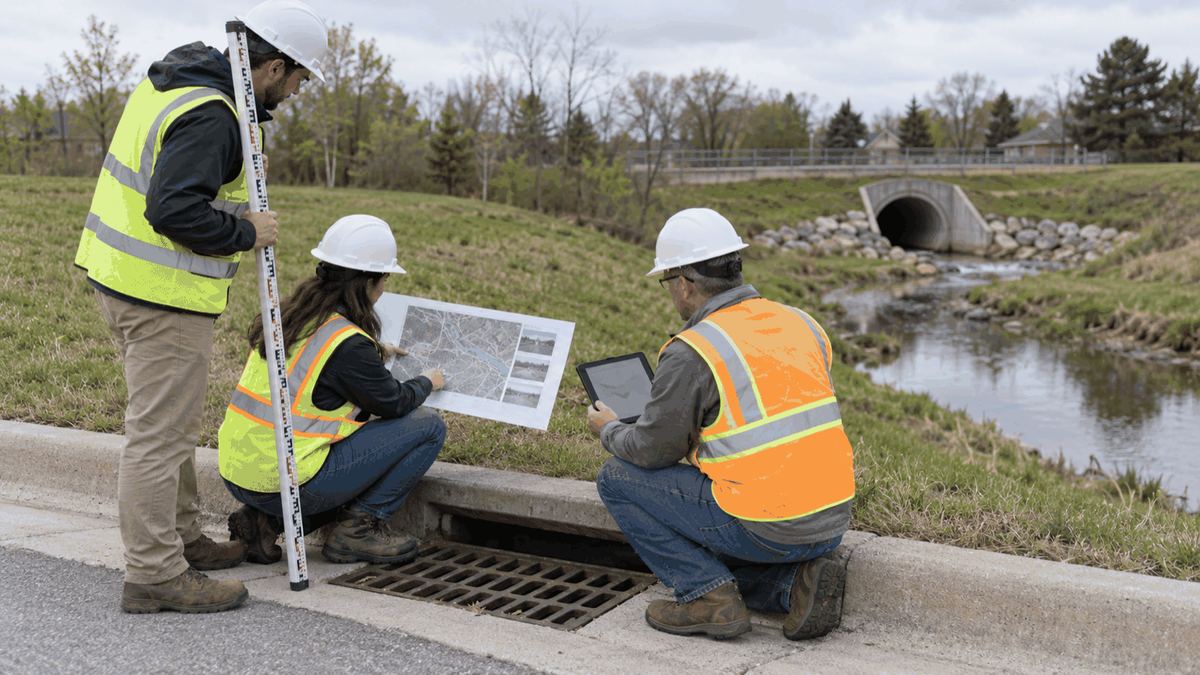
Before a plumbing repair is concealed, property teams should document moisture, dry materials, responsibilities, and the handoff for follow-up.
Plumbing repairs can solve the source of a leak without proving that surrounding materials are dry. A wall cavity, cabinet base, ceiling assembly, or flooring system may hold moisture after the visible drip stops. If the repair is closed too quickly, later occupants may notice an odor, staining, or deterioration and the team may have difficulty determining what happened.
This article is for property managers, maintenance supervisors, building engineers, contractors, and inspectors who coordinate moisture response. It supports practical prevention and documentation. It does not set a federal mold threshold, diagnose a health condition, guarantee a remediation result, or replace state and local requirements, qualified assessment, or project-specific professional judgment.
Who This Affects
Property managers often coordinate the owner, resident, maintenance technician, plumber, restoration vendor, insurance contact, and construction team. Each person may see only one part of the event. The plumber may focus on repairing the pipe. The technician may remove wet finishes. The manager may need to explain timing to an occupant. The person closing the wall needs reliable information from all of them.
The same issue appears in offices, schools, hotels, retail buildings, healthcare facilities, and multifamily housing. A small supply-line leak, failed valve, drain backup, roof penetration, or HVAC condensate problem can affect more material than the original opening suggests. Building age, material type, ventilation, occupancy, and access all influence the response.
Training is especially useful for teams that handle repeated repairs. A shared process helps staff distinguish source control from drying, recognize when an issue needs escalation, and capture evidence before finishes are removed. It can also reduce confusion when a contractor changes during a project.
Common Mistakes and Misconceptions
A frequent misconception is that stopping visible water means the moisture event is over. Source control is essential, but wet materials may continue to release moisture after the pipe is repaired. The team should identify what was wet, how long it may have been wet, and what access is needed to verify drying.
Another misconception is that a single meter reading proves the whole assembly is dry. Readings depend on material, instrument, calibration, surface condition, and comparison area. A number without a location, method, and reference point is difficult to interpret later.
Some teams also assume that an odor proves a specific cause. Odor can have several sources, and a visual observation alone does not establish a diagnosis. Staff should document observations, avoid unsupported conclusions, and escalate questions that exceed their training.
There is no single federal mold threshold that tells a property team whether every material can be closed. State and local rules, owner procedures, project specifications, and qualified professional advice may apply. A course can provide a certificate of completion, but it does not guarantee licensure or replace jurisdiction-specific requirements.
The Moisture Documentation Issue
The record should tell a simple story from discovery through handoff. Start with the date, time, location, reported symptom, suspected source, affected rooms, occupancy concerns, and immediate controls. Photograph the source and surrounding materials when safe and permitted. Note what was inaccessible, removed, or already altered.
During repair, record the source-control action, materials opened, visible conditions, equipment used, and people responsible for each step. A technician may place air movers or dehumidification equipment, while a contractor may remove insulation or drywall. The manager should know who is checking progress and how the result will be communicated.
Before closing a wall, compare readings with a dry reference area of the same or similar material when that comparison is meaningful. Record the instrument, locations, readings, date, and limitations. Do not hide the fact that a cavity was not accessible. If the assembly needs more drying, inspection, or removal, write that decision down.
Build a Handoff Packet
A practical packet may include the work order, photographs, source-repair invoice, moisture map, equipment log, material list, readings, occupant communication, contractor scope, and open questions. Keep the packet with the property record according to the organization's retention process. The purpose is not to create a dramatic file. It is to make the next decision easier.
Use plain language. Say “water staining observed on ceiling tile” rather than assigning a cause that was not verified. Say “wall cavity not opened” rather than implying that hidden materials were inspected. Clear limits protect the reliability of the record and help the next professional decide what is needed.
What Property Teams Should Check Before Closing
First confirm that the source is controlled and that the repair was tested. Look beyond the repaired fitting for adjacent wet materials, insulation, flooring transitions, cabinet voids, and concealed spaces. Ask whether water traveled along framing, a pipe chase, a ceiling, or a plenum.
Second, identify materials that can retain moisture. Porous finishes, paper-faced products, carpet, padding, wood components, insulation, and contents may require different handling. Avoid assuming that air movement alone reaches a cavity or that a surface reading represents the interior of an assembly.
Third, inspect the surrounding area for staining, swelling, delamination, odor, visible growth, and changes in condition. These observations do not by themselves diagnose a problem, but they help decide whether a more detailed assessment or specialized contractor is appropriate.
Fourth, review ventilation and occupant conditions. If drying equipment changes temperature, noise, access, or indoor air movement, communicate the plan and keep equipment operating as intended. Do not create an electrical, trip, security, or fire-safety hazard while trying to dry a space.
Finally, establish a follow-up date. A closeout should identify who will return, what will be checked, and what happens if readings or conditions are not acceptable. A property team should not rely on memory after the wall is restored.
How Training Helps
Moldtraining.us courses can help property and maintenance teams build a shared vocabulary for moisture sources, observations, documentation, prevention, and escalation. A relevant course may support a supervisor briefing or new-hire orientation, especially when the team handles recurring plumbing, HVAC, roof, or turnover work.
Training can show staff how to ask better questions: What was wet? When was it found? What source was repaired? What materials were affected? What was inaccessible? Who is responsible for the next check? The answers support a more useful record than a simple note that says “leak fixed.”
Courses provide certificates of completion and do not guarantee licensure. Employers should direct workers to state and local requirements before assigning inspection, assessment, remediation, or other regulated services. Site-specific hazards and professional decisions remain the responsibility of the employer and qualified professionals.
A soft next step is to use the course concepts in a tabletop exercise. Give the team a fictional ceiling leak, ask each role to document its observations, then compare the handoff packets. The gaps will show whether the organization's process is understandable before a real event creates pressure.
Frequently Asked Questions
Is a repaired pipe enough to close the wall?
No. The repair controls the source, but the team should evaluate affected materials, drying progress, access to concealed areas, and any project or local requirements before closing the assembly.
Does a moisture meter prove that a building has mold?
No. A meter provides information about moisture under its operating limits. It does not identify mold, determine a cause, or replace a qualified assessment.
Should every leak receive the same response?
No. Duration, material, volume, temperature, ventilation, occupancy, and access can change the response. A small visible drip and a concealed long-term leak may require different documentation and escalation.
Do moldtraining.us courses grant a license?
No. The courses provide certificates of completion and do not guarantee licensure. Direct questions about regulated work to the applicable state or local authority.
What should a closeout record contain?
At minimum, record the source, location, dates, affected materials, actions taken, observations, readings and limitations, responsible parties, photographs, and follow-up decision.
Conclusion
Plumbing coordination is also moisture management. Property teams protect the quality of a repair when they document the source, inspect the surrounding materials, verify drying with appropriate limits, communicate roles, and preserve a handoff before walls close. Training supports that routine, while local requirements and qualified judgment determine what the project ultimately needs.
Sources U.S. Environmental Protection Agency, Mold and Moisture, https://www.epa.gov/mold; U.S. Environmental Protection Agency, Mold Remediation in Schools and Commercial Buildings, https://www.epa.gov/mold/mold-remediation-schools-and-commercial-buildings-guide; Centers for Disease Control and Prevention, Mold, https://www.cdc.gov/mold-health/about/index.html