
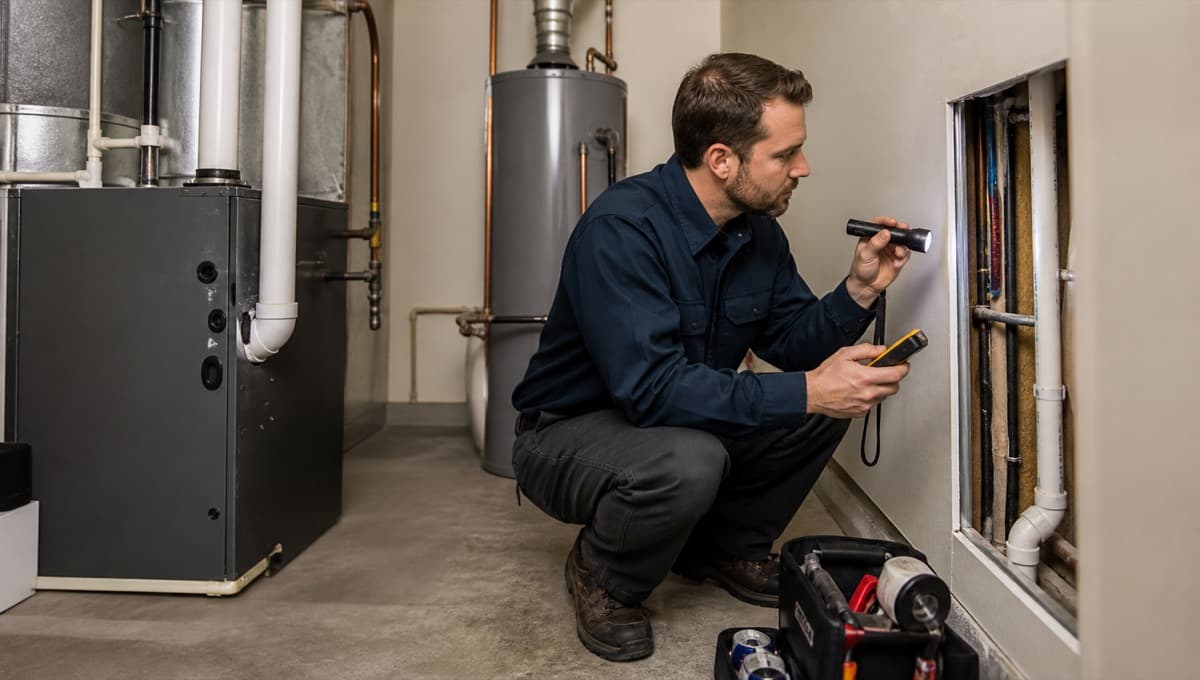
Maintenance workers are often the first people to see the signs of a mold problem. A tenant reports a musty odor. A ceiling tile looks stained after a storm. A bathroom exhaust fan is not pulling air. A utility closet has damp drywall near a pipe chase. Those observations do not make a maintenance employee a mold inspector, but they make that employee an important early responder.
Mold awareness training for maintenance workers helps building teams recognize moisture conditions, document what they see, take appropriate first steps, and know when to escalate. For property managers, facilities supervisors, hotel engineers, office building operators, and employers with in-house maintenance staff, the goal is not to turn every technician into a remediation contractor. The goal is to build a practical response system before a small moisture issue becomes a larger occupant concern.
This guide explains what maintenance staff should understand, what to avoid, and how training supports safer building operations.
Why Maintenance Workers Need Mold Awareness
Most mold problems are moisture problems first. The CDC notes that mold grows where moisture is present, including around roof, window, and pipe leaks or after flooding. EPA guidance also emphasizes moisture control as the key to controlling mold indoors.
That makes maintenance workers central to prevention. They inspect mechanical rooms, respond to work orders, enter vacant units, clear condensate drains, check roof leaks, and notice recurring condensation. A leasing employee may receive the first complaint, but maintenance often gathers the first useful field information.
Without training, early observations can be inconsistent. One technician may write "mildew cleaned" while another writes "black mold found" without confirmation. Someone may wipe a visible spot but miss the slow leak behind the wall. Mold awareness training gives staff a shared vocabulary and escalation process.
What Maintenance Staff Should Know About Mold
Maintenance workers do not need to memorize every mold species. In day-to-day property operations, the more useful knowledge is practical: mold needs moisture, suitable material, oxygen, and time. Remove the moisture source and dry affected materials quickly, and the chance of growth decreases.
Staff should understand common indoor moisture sources, including plumbing leaks, roof leaks, window and wall leaks, clogged HVAC condensate drains, poor bathroom ventilation, wet carpet, high indoor humidity, damp crawl spaces, and exterior drainage problems. Musty odors, staining, damaged drywall, bubbling paint, warped baseboards, and recurring condensation are warning signs that deserve documentation.
Visible mold should not be ignored just because the area is small. At the same time, maintenance staff should avoid dramatic language or unsupported conclusions. Calling a stain a specific mold type without testing or professional evaluation is usually not appropriate. Good training helps staff separate observation from diagnosis.
The First Response: Stop Water, Protect People, Document Conditions
When a maintenance worker responds to a suspected mold or moisture complaint, the first priority is to identify whether there is active water intrusion. If a pipe is leaking, a roof is dripping, or a condensate line is overflowing, the immediate task is water control. That may mean shutting off a supply valve, placing a service call, or coordinating an emergency vendor response.
The second priority is to avoid unnecessary exposure or disturbance. CDC cleanup guidance recommends protective equipment such as gloves, eye protection, and appropriate respiratory protection for cleanup work. Maintenance employees should not tear into mold-contaminated materials, disturb large affected areas, or create airborne dust unless they have the right scope, equipment, and authorization.
The third priority is documentation. Work orders should record the date, location, condition, suspected moisture source, actions taken, photos, and follow-up needs. A useful note might say: "Observed water staining and soft drywall below supply line in Unit 204 bathroom vanity. Shut off supply valve. Photos uploaded. Plumbing vendor requested." That note is much stronger than "checked mold."
Common Areas Maintenance Teams Should Watch
Certain building areas deserve routine attention because they frequently combine moisture, limited ventilation, and organic materials.
Bathrooms are common trouble spots. Staff should look for failed caulking, slow toilet leaks, loose supply lines, poor exhaust fan performance, and moisture damage around baseboards or behind vanities. Kitchens and laundry areas also need attention because sink cabinets, appliance lines, washing machine hoses, and dryer venting can create hidden moisture problems.
HVAC and mechanical areas can create repeat issues through clogged condensate drains, uninsulated cold surfaces, dirty drain pans, duct leakage, and humidity problems. Roofs, windows, exterior walls, crawl spaces, and utility penetrations also deserve attention, especially when staining appears after rain.
What Maintenance Workers Should Not Do
Training is as much about boundaries as it is about tasks. Maintenance workers should not tell tenants, employees, guests, or customers that an area is mold-free based only on a quick visual check. They should not identify a visible substance as a specific mold species unless qualified sampling and interpretation have been performed.
Maintenance staff should also avoid painting or caulking over visible growth or water staining without addressing the underlying moisture source. Covering the surface may make the area look better temporarily, but it can leave the underlying condition unresolved.
Another common mistake is treating all mold-related work as ordinary cleaning. Small surface cleaning on hard, nonporous materials may be appropriate in some circumstances, but porous or water-damaged materials may require removal, drying, containment, or professional remediation. The correct scope depends on the affected area, material, occupant concerns, and employer procedures.
Documentation Mistakes That Create Risk
Poor documentation can turn a manageable issue into a confusing record. A work order that says "mold removed" may imply more certainty and more work than actually occurred. A note that says "tenant caused issue" without evidence can create unnecessary conflict.
Maintenance teams should use objective language: observed, reported, measured, repaired, replaced, dried, referred, scheduled, completed. If moisture readings are taken, the record should state where, when, and by whom. If access is denied or delayed, that should be documented too. If a vendor is called, the record should include the vendor name, date of contact, and scope requested.
Supervisors should also decide when photos are required. A simple photo set can show the initial condition, the moisture source, the repair area, and the final condition.
When to Escalate Beyond In-House Maintenance
Maintenance staff should know when to bring in a supervisor, property manager, environmental consultant, mold inspector, or remediation contractor. Escalation is often appropriate when there is active water intrusion, suspected contamination inside wall cavities, widespread growth, recurring complaints, occupant health concerns, HVAC contamination, sewage or floodwater involvement, or uncertainty about the source.
The IAC2 Mold Inspection Standards of Practice distinguish inspection scope, moisture observations, sampling procedures, limitations, and reporting. A general maintenance worker is not performing a formal mold inspection simply by responding to a work order, but those standards show why scope and documentation matter. Employers should define when a supervisor, third-party vendor, or trained inspector should be involved.
How Training Supports Better Building Operations
Mold awareness training creates a shared baseline for staff with different experience levels. New maintenance workers learn what conditions to watch for. Experienced technicians align on documentation and escalation expectations. Leasing and office staff can use the same intake language as maintenance.
For many employers, the certificate of completion is also useful for training records. It does not mean that EPA, OSHA, or CDC has certified the employee as a mold inspector. It documents that the employee completed a defined training course. That distinction matters.
moldtraining.us offers Mold Prevention & Remediation Awareness Training for general staff, maintenance workers, leasing and office staff, new hires, seasonal workers, and facilities employees who need a practical mold-awareness foundation. The course is online and self-paced, with a certificate of completion after the final exam. For property teams that also need tenant complaint handling, documentation, and vendor coordination, the Property Management Mold Training course may be the more complete fit.
Mold Awareness Checklist for Maintenance Teams
A simple field checklist can make training easier to apply:
- Look for active water first.
- Identify the affected room, surface, and approximate area.
- Photograph visible staining, dampness, damaged materials, and possible moisture sources.
- Record occupant reports without adding unsupported conclusions.
- Stop or contain water intrusion when within your role and training.
- Avoid disturbing suspect materials unnecessarily.
- Escalate when the source, scope, health concern, or required repair is beyond routine maintenance.
- Confirm drying, repair, or vendor follow-up in the work order.
FAQ
Do maintenance workers need mold awareness training?
Yes. Maintenance workers often identify moisture problems and occupant complaints early. Mold awareness training helps them recognize warning signs, document conditions, avoid unsupported claims, and escalate appropriately.
Does a mold awareness course make someone a certified mold inspector?
No. A mold awareness course may provide a certificate of completion, but it does not by itself make someone a third-party certified mold inspector. Inspector-level work generally requires more specialized training and attention to state or local requirements.
Should maintenance workers test the air for mold?
Routine air testing is not always needed for a maintenance response. CDC notes that there are no set standards for acceptable quantities of different molds in homes, and sampling can be expensive. If testing is being considered, it should be tied to a clear scope and performed or interpreted by qualified personnel.
What is the most important mold prevention step?
Moisture control is the most important prevention step. Fix leaks, dry wet materials quickly, maintain ventilation, manage humidity, and document recurring moisture patterns so they are not treated as isolated complaints.
Can maintenance staff clean small mold areas?
That depends on employer policy, the material involved, the source of moisture, occupant concerns, and the worker's training and protective equipment. Staff should not disturb larger or hidden contamination without the right scope and controls.
Which moldtraining.us course fits maintenance workers?
For general maintenance employees and front-line staff, Mold Prevention & Remediation Awareness Training is usually the best starting point. For property managers and maintenance supervisors handling tenant complaints, documentation, and vendor coordination, Property Management Mold Training may be a better fit.
Conclusion
Maintenance workers do not need to become mold experts to make a major difference. They need to recognize moisture conditions, respond quickly to active water, document observations accurately, avoid overstepping their role, and know when to escalate. A practical mold awareness training program gives building staff a common process that supports safer work, clearer communication, and better prevention across the property.
Sources
- U.S. Environmental Protection Agency, Mold Remediation in Schools and Commercial Buildings Guide: Chapter 1
- Occupational Safety and Health Administration, Mold: Control and Clean-up
- Centers for Disease Control and Prevention, Mold
- Centers for Disease Control and Prevention, Mold Clean Up Guidelines and Recommendations
- International Association of Certified Indoor Air Consultants, Mold Inspection Standards of Practice