
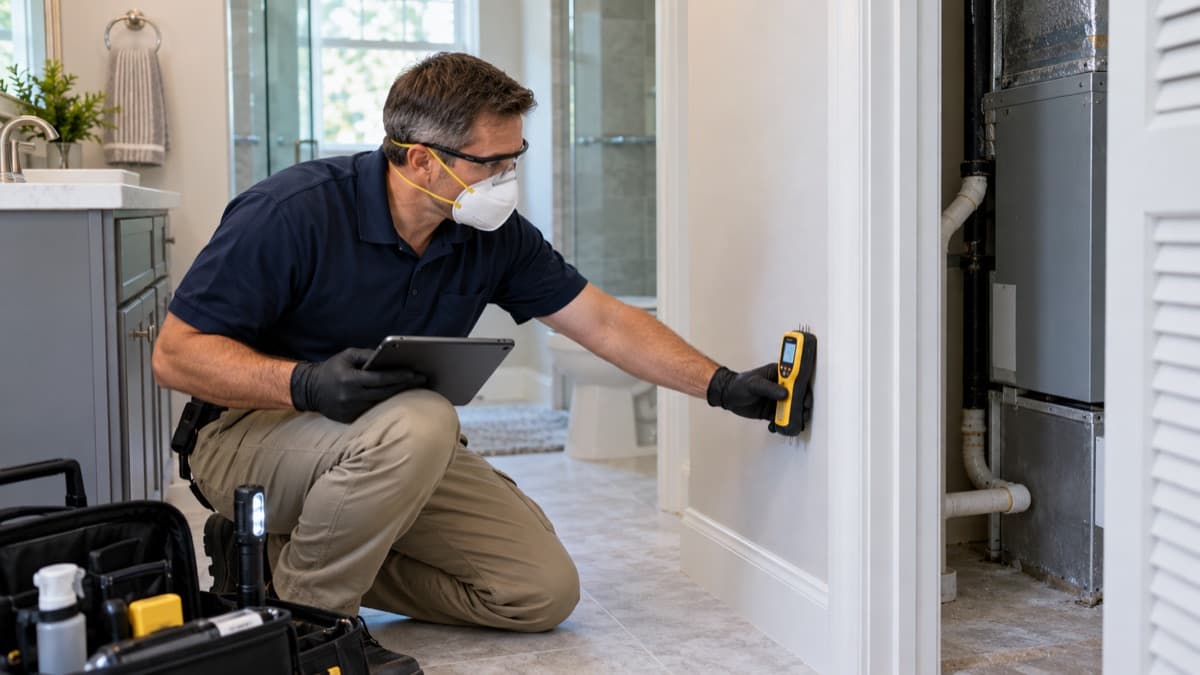
Home inspectors are often the first professionals a buyer, seller, property manager, or real estate agent calls when a building has moisture concerns. Adding mold inspection services can be a natural next step, but it should be approached with training, boundaries, and careful communication. Mold- related questions can involve occupant concerns, visible growth, past leaks, humidity, HVAC issues, drainage, building materials, and remediation referrals. A home inspector who expands into this service needs more than a moisture meter and a sample kit.
This article is for home inspectors, remediation contractors, environmental consultants, real estate professionals, and business owners who want to understand what mold inspection training should cover before offering mold-related services. It explains the practical skills, common misconceptions, and training path that can help an inspector provide clearer documentation without overpromising what a course or inspection can prove.
Why Home Inspectors Consider Mold Services
Mold concerns often appear during real estate transactions because buyers want to know whether a stain, odor, leak history, or humidity problem could affect the property. Sellers may want documentation before listing. Property managers may need a trained eye when maintenance teams find water damage. Remediation contractors may need better inspection knowledge to communicate scope boundaries. For a home inspector, these situations can create demand for a more specialized service.
Adding mold services can also help inspectors serve clients more completely. Moisture problems often connect to roofing, plumbing, grading, crawl spaces, basements, ventilation, bathroom exhaust, HVAC condensate, insulation, and building envelope conditions. Inspectors already observe many of these systems. Mold inspection training helps connect those observations to a more focused moisture and indoor air quality conversation.
The important distinction is that mold inspection is not the same as making medical claims, guaranteeing a building is safe, or promising that a sample result answers every question. A well- trained inspector understands limitations. They document visible conditions, moisture indicators, conducive conditions, sampling decisions when offered, and recommendations for further evaluation or remediation when appropriate.
What Mold Inspection Training Should Cover
A useful mold inspection training course should begin with moisture. Mold growth depends on water, so inspectors need to recognize likely moisture sources and understand how building conditions can support growth. That includes leaks, condensation, high humidity, poor ventilation, water intrusion, flooding history, HVAC issues, roof or window failures, plumbing defects, crawl space moisture, and materials that remain damp.
Training should also cover inspection process. Inspectors need a consistent method for client intake, visual observation, moisture measurements, photo documentation, condition descriptions, and report organization. If sampling is discussed, training should explain what sampling can and cannot show, when it may be appropriate, how chain of custody works, and why lab interpretation should be communicated carefully. Inspectors should also understand that there are no federal EPA, OSHA, or CDC airborne mold thresholds that automatically determine whether a building is acceptable.
Good training also addresses standards and ethics. IAC2-aligned mold inspection training can help inspectors understand professional inspection practices, report language, scope boundaries, conflicts of interest, and the difference between inspection and remediation. In some states or local jurisdictions, mold assessment or remediation may be regulated, so inspectors should verify requirements where they work before advertising services.
Practical Skills Inspectors Need in the Field
Field skill matters because mold inspection is built around observation and judgment. An inspector should know how to look for staining, water marks, musty odor, condensation patterns, inadequate ventilation, damaged materials, past repairs, and hidden-risk areas. They should know how to use a moisture meter appropriately and how to explain that meter readings are screening tools, not final proof of mold growth.
Communication is equally important. Clients may be worried, sellers may be defensive, and real estate timelines may be tight. A trained inspector should use neutral language. Instead of declaring a building contaminated based on a stain, the report can describe visible suspect growth, moisture conditions, and recommended next steps. Instead of promising clearance, the inspector can explain the limits of the inspection and when remediation or further professional evaluation may be needed.
Reporting should be clear enough that clients can act. Photos should identify location and context.
Recommendations should distinguish between correcting moisture sources, cleaning or removing affected materials, improving ventilation, and consulting qualified remediation or environmental professionals. If the inspector also owns a remediation business, ethical separation and local rules become especially important.
Common Mistakes and Misconceptions
One common misconception is that a short course turns someone into a government-certified mold inspector. Moldtraining.us courses provide certificates of completion and standards-aligned education, but they do not create federal licensure or imply EPA, OSHA, or CDC approval. Inspectors should verify state and local rules before using certification language in marketing.
Another mistake is focusing too much on air sampling and too little on moisture investigation.
Samples can be useful in some situations, but they do not replace a careful visual inspection, building history, or moisture source evaluation. Sampling without a clear question can confuse clients and create reports that are hard to interpret.
Inspectors should also avoid making health conclusions. Mold exposure can affect people differently, and medical questions belong with qualified health professionals. The inspector role is to document building conditions, identify moisture concerns, explain inspection limitations, and recommend appropriate next steps.
How Training Supports a Better Mold Inspection Service
Mold Inspector Certification Training from moldtraining.us is designed for aspiring mold inspectors, home inspectors adding mold services, remediation contractors, environmental consultants, and real estate professionals who want a structured foundation. The course is online and self-paced, provides a certificate of completion, and aligns with IAC2 concepts so learners can understand inspection process, moisture conditions, documentation, and professional boundaries.
For inspectors who only need a general staff-level overview, Mold Prevention and Remediation Awareness Training may be a better fit. For apartment communities or building teams that respond to resident complaints, Property Management Mold Training may be more relevant. The best choice depends on the learner role. A home inspector offering mold inspection services usually needs the more detailed inspector-focused course.
Training should be paired with written procedures, report templates, equipment practice, and review of local requirements. Inspectors should also decide how they will handle sampling, referrals, remediation conflicts, reinspections, and client questions before launching the service. A clear process protects both the client and the inspector.
FAQ
Do home inspectors need mold inspection training before offering mold services? Training is strongly recommended because mold inspections require moisture investigation, scope control, documentation, and careful communication. Some states or local jurisdictions may also have specific requirements, so inspectors should verify local rules.
Does EPA certify mold inspectors? EPA does not provide a federal mold inspector certification for private inspectors. Courses can provide certificates of completion and standards-aligned education, but inspectors should avoid implying federal approval.
Is mold inspection the same as mold remediation? No. Inspection focuses on evaluating and documenting conditions. Remediation focuses on correcting moisture sources and removing or cleaning affected materials. Some businesses offer both, but conflicts of interest and local rules should be managed carefully.
Can a mold inspection guarantee that a building is safe? No inspection can guarantee that. A mold inspection can document visible conditions, moisture indicators, sampling results if performed, and recommended next steps within the stated scope.
What course is most relevant for home inspectors? Mold Inspector Certification Training is usually the best fit for home inspectors adding mold services because it is built around inspection practices, documentation, and standards-aligned concepts.
Conclusion
Mold inspection can be a valuable service for home inspectors, but it works best when built on training, moisture knowledge, clear scope, and responsible reporting. The strongest inspectors do not rely on fear or unsupported claims. They explain what they observed, what conditions may support growth, what the inspection can and cannot conclude, and what the client should consider next.
For home inspectors who want to add mold services, moldtraining.us offers Mold Inspector Certification Training with a practical, self-paced path and a certificate of completion. It is a sensible next step for inspectors who want to serve clients more confidently while respecting professional and regulatory boundaries.