
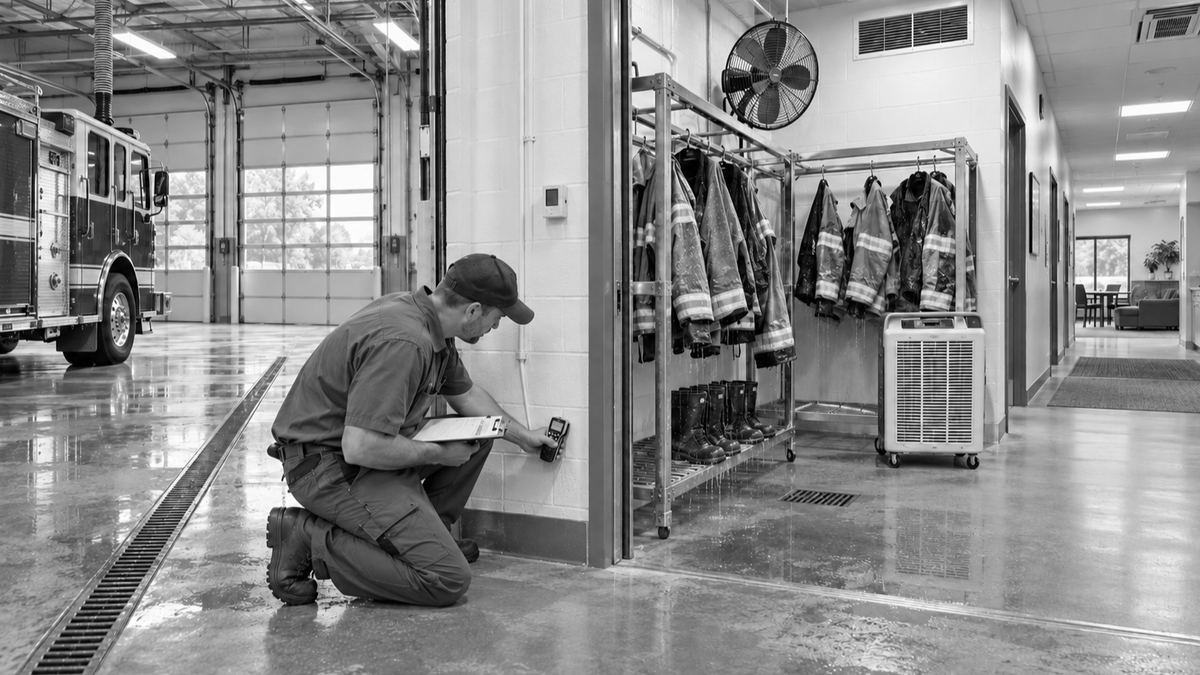
Fire stations combine wet apparatus, damp protective gear, floor drains, sleeping areas, kitchens, and round-the-clock occupancy in one demanding building. That mix makes moisture control a shared operational task, not a problem that belongs only to facilities staff after visible mold appears.
The most useful prevention plan follows water from a returning response through the apparatus bay, wash area, gear room, HVAC system, walls, and occupied spaces. It also assigns who reports, inspects, dries, documents, and verifies each condition so a small wet area does not disappear between shifts.
Where Moisture Builds Up in Fire Stations
Apparatus bays regularly receive rainwater, wash water, melted snow, mud, and moisture carried on hose and equipment. Floor slopes and drains should move that water away, but debris, damaged seals, low spots, and blocked drain lines can leave edges and wall bases wet. Overhead doors can admit wind-driven rain and humid outdoor air, while temperature differences at large metal doors can support condensation.
Turnout gear and hose may return wet even when the bay floor looks dry. Gear rooms need a drying process that addresses the equipment without pushing humid air into adjacent wall cavities, offices, or sleeping areas. Fans and portable dehumidifiers can help only when they are correctly sized, positioned, drained, maintained, and used under the facility's procedures.
Living quarters create different moisture loads. Showers, kitchens, laundry, plumbing fixtures, ice machines, and HVAC condensate all need routine observation. A leak above a ceiling or behind a cabinet may be separated from the apparatus bay but still compete for the same maintenance response. Staff should know how to report both operational water and ordinary building leaks.
HVAC and pressure relationships matter
A station may contain hot bays, conditioned offices, sleeping rooms, kitchens, bathrooms, and dedicated gear areas. Air can move moisture and odors between those zones. Dirty drain pans, blocked condensate lines, poorly sealed penetrations, or inappropriate pressure relationships can contribute to wet materials and recurring complaints.
Moisture checks should include supply and return areas, condensate routes, exterior-wall surfaces, ceiling tiles, and locations where warm humid air meets cooler materials. The goal is not to diagnose the entire HVAC system with a handheld meter. It is to identify patterns that require maintenance or professional evaluation.
Build a Station-Specific Moisture Routine
Start by mapping predictable water sources and sensitive materials. Mark apparatus washing, hose drying, turnout gear, showers, laundry, kitchens, roof penetrations, mechanical rooms, exterior doors, drains, and plumbing chases. Add places where paper-faced wallboard, ceiling tile, insulation, wood, carpet, or stored supplies could stay damp.
Assign routine checks by role and shift. A crew returning from a wet incident can report standing water, door leakage, or a drying-system problem. Custodial staff may notice recurring condensation or odor. Facilities staff can inspect drains, roof and wall leaks, HVAC condensate, and moisture readings. Management needs a method for tracking work through verification instead of closing a ticket when someone merely visits the area.
EPA guidance emphasizes controlling the source of water and drying damp or wet materials quickly, ideally within 24 to 48 hours. That time frame is a practical response target, not a federal mold threshold or a guarantee. Material type, water quality, hidden cavities, temperature, ventilation, and the extent of wetting influence what response is appropriate.
Document enough to support the handoff
A useful report records the date and time found, exact location, likely source, visible extent, materials affected, photographs, immediate control, person notified, and whether the area can remain occupied. Follow-up can record moisture readings with the instrument and location identified, drying equipment, repair status, material removal when needed, and the basis for completion.
Avoid recording only that an area was "dry." Note what was checked and how. A surface can feel dry while an adjacent base, wall cavity, insulation layer, or floor assembly remains wet. If staff cannot safely assess a hidden area, the report should say so and route the condition to an appropriate person.
Common Mistakes and Misconceptions
One mistake is assuming that fire-station floors are designed to be wet, so standing water does not matter. Durable concrete may tolerate washing, but water at wall bases, door tracks, storage, cabinets, or penetrations can reach more moisture-sensitive assemblies. Drainage performance and housekeeping still matter.
Another misconception is that strong air movement always solves drying. A fan can move humid air into a corridor or cavity, spread dust, or dry only the exposed surface. Drying decisions should consider water source, material, containment needs, HVAC operation, and whether dehumidification or removal is appropriate.
Do not rely on odor as the only indicator. Some wet materials have little odor, and odors can come from gear, drains, vehicles, cleaning products, or other sources. Likewise, a moisture meter reading needs context. Different materials and meters require appropriate interpretation, and readings are not a stand-alone mold diagnosis.
Avoid painting or sealing over damp or visibly affected materials. EPA guidance advises against enclosing, sealing, or painting materials that are wet or show biological growth. Correct the moisture source, evaluate the affected materials, and use qualified help when the size, water quality, hidden conditions, or occupant concerns exceed the team's training.
There is no federal indoor mold threshold that makes a building pass or fail. EPA states that federal limits for mold or mold spores have not been established. Sampling is not a substitute for finding and correcting visible moisture and water problems.
How Training Helps
Training gives firefighters, officers, custodial staff, and maintenance personnel a consistent vocabulary for moisture source, affected material, visible condition, immediate control, and follow-up. That consistency is especially valuable across shift changes, when a wet gear room or leaking door can otherwise be rediscovered repeatedly without ownership.
The Property Management Mold Training course from moldtraining.us is relevant for facility managers, maintenance staff, and others responsible for inspection, documentation, communication, and response planning. General staff who need basic recognition and reporting may fit the Mold Awareness Training course. Employers should match training depth to assigned duties and supplement online learning with station procedures, building orientation, and equipment-specific instruction.
Courses provide certificates of completion. They do not guarantee a state license or local authorization to perform regulated mold assessment or remediation work. Requirements vary, so learners and employers should check applicable state and local rules before assigning regulated services.
Training also helps teams recognize the boundary of their role. A trained employee can document a leak, protect the area, and start the facility's response without claiming to diagnose health effects or certify that a building is mold-free. Medical questions belong with qualified health professionals, and complex building or remediation questions may require appropriately qualified contractors or consultants.
Frequently Asked Questions
Should wet turnout gear be dried inside the living quarters?
The station should use its designated gear-cleaning and drying process. Moving damp gear into sleeping or office areas can add moisture and contaminants to spaces not designed for that load. Check the equipment manufacturer's instructions, department procedures, ventilation, drainage, and separation of gear areas from occupied rooms.
How quickly should a station respond to a roof or plumbing leak?
Respond immediately to stop or control the source and protect people and equipment. EPA guidance recommends drying wet materials as soon as possible, ideally within 24 to 48 hours. Some materials or contaminated-water events may require removal or specialized response rather than routine drying.
Does a high moisture reading prove mold is present?
No. A moisture reading can help locate and compare damp materials, but it does not identify mold by itself. Record the instrument, material, location, comparison area, and conditions, then use the facility's evaluation process.
Is routine air sampling needed after every water event?
Usually the first priorities are controlling water, drying materials, and checking the affected area. CDC notes that routine air sampling for mold is not recommended and that visual inspection or musty odors can be more reliable for finding a problem. A qualified professional can advise when specialized assessment is appropriate.
Who should close a moisture work order?
The station should assign that responsibility in advance. Closure should confirm that the source was repaired or controlled, affected materials were addressed, drying or removal was completed, and follow-up found no continuing moisture condition. The person who performed a repair and the person verifying the area may be different.
Can training replace state mold licensing requirements?
No. Training can support awareness and job procedures, and a course may issue a certificate of completion, but it does not guarantee licensure. Check state and local requirements for mold assessment, remediation, contracting, and related services.
A Practical Next Step
Walk one station from the apparatus bay to the gear room, showers, laundry, kitchen, sleeping areas, roof-access points, and mechanical spaces. List water sources, drainage paths, moisture-sensitive materials, inspection responsibility, reporting method, and the person who verifies closure. Include overnight and weekend escalation because stations do not operate only during business hours.
If the team needs a shared foundation, review the Property Management Mold Training or Mold Awareness Training options from moldtraining.us and select the level that matches each role. Pair the course with the station map, actual response contacts, and a short shift-handoff exercise.
Conclusion
Fire-station mold prevention begins with moisture control across operational and living areas. A routine that connects wet apparatus, gear drying, drainage, HVAC, plumbing, documentation, and verification helps the team respond before a recurring condition becomes harder to manage.
Sources
EPA, Biological Contaminants and Indoor Air Quality: https://www.epa.gov/indoor-air-quality-iaq/biological-contaminants-and-indoor-air-quality
EPA, A Brief Guide to Mold, Moisture and Your Home: https://www.epa.gov/mold/brief-guide-mold-moisture-and-your-home
CDC NIOSH, Mold Testing and Remediation: https://www.cdc.gov/niosh/mold/testing-remediation/index.html
moldtraining.us, Property Management Mold Training: https://moldtraining.us/mold-training-for-property-management/