
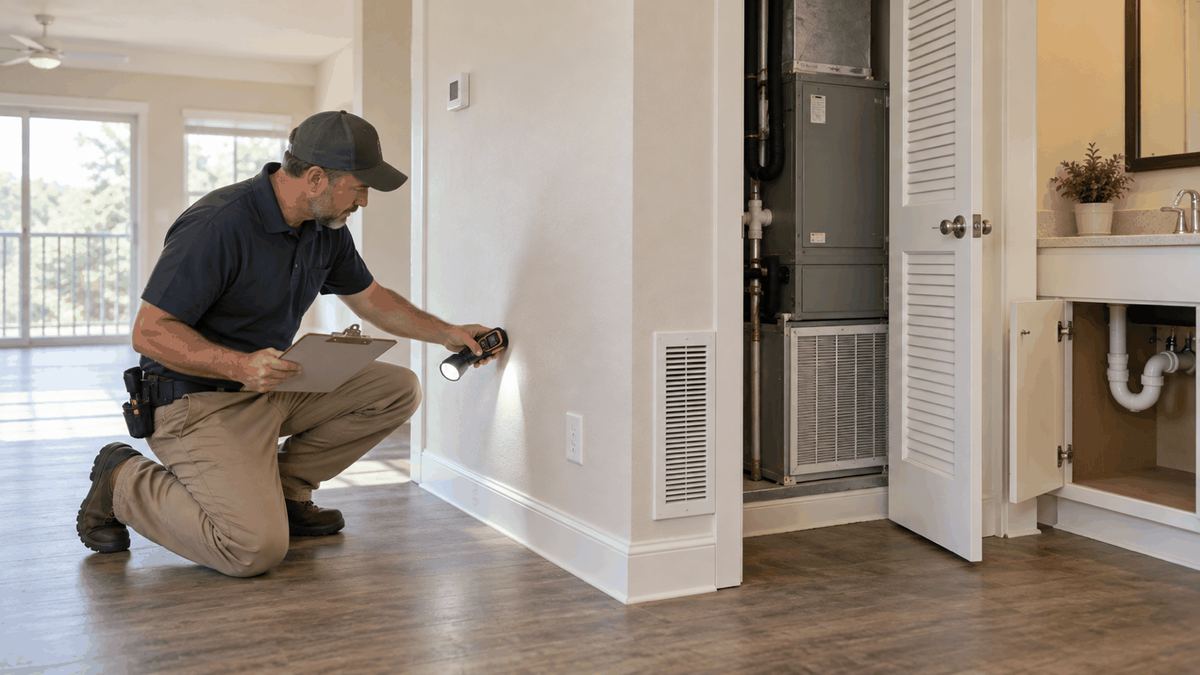
Tenant turnover inspections help property teams find moisture early, document conditions, and complete repairs before a new occupant moves in.
Between occupants, a unit may be vacant long enough for a small leak, cooling problem, condensation issue, or plumbing defect to go unnoticed. The next resident may then report an odor, staining, or visible growth that appears to have started suddenly. A turnover workflow cannot prevent every building problem, but it can help property managers and maintenance teams identify conditions that deserve attention before they become a larger complaint.
The work is primarily about moisture control and clear documentation. A routine inspection should not turn a leasing employee into a mold inspector or require a maintenance worker to make a laboratory conclusion. Staff can record observable conditions, protect themselves during the inspection, escalate concerns, and coordinate qualified evaluation or remediation when appropriate. Moldtraining.us offers courses that help general staff, maintenance teams, property managers, and aspiring inspectors understand those role boundaries.
Who This Affects
The process matters to property managers, leasing teams, maintenance supervisors, building engineers, owners, and vendors working in apartments, hotels, offices, schools, and other occupied buildings. It is especially useful for organizations with frequent move-outs, seasonal vacancies, older plumbing, humid conditions, or multiple teams sharing responsibility for repairs.
Leasing staff may be the first people to notice an odor or a damaged surface during a showing. Maintenance workers may see a loose supply line, a wet cabinet, or a condensate problem while preparing the unit. Property managers need a consistent way to receive the observation, assign the work, communicate with the resident, and retain evidence. Vendors need enough information to understand what was found and what access or repair is requested.
State and local requirements can affect disclosure, response, inspection, licensing, or remediation decisions. There is no single federal airborne mold threshold that answers every building question, and EPA, OSHA, and CDC do not certify mold inspectors through the training described here. Organizations should check applicable state and local requirements and use qualified professionals for work outside the employee's role.
The Turnover Moisture Issue
Turnover inspections are often rushed because the next lease, cleaning appointment, or maintenance schedule is already set. That pressure can lead to a quick visual walk-through that misses the places where moisture problems begin: under sinks, around toilet bases, behind appliances, at HVAC closets, near exterior doors, around windows, under ceiling penetrations, and along baseboards adjacent to bathrooms or mechanical rooms.
The inspection should start with a simple question: is there evidence of current or past moisture that needs action before the space is reoccupied? Evidence may include water staining, swollen materials, peeling paint, musty odor, dampness, condensation, corrosion, failed caulk, blocked drainage, or equipment that is not operating as intended. The observation should be recorded without overstating what it proves. A stain can indicate a past event, but it does not by itself identify the source or confirm active growth.
Moisture sources can be building-related or operational. A supply line may leak inside a cabinet. A roof or window may allow rain entry. An HVAC coil or drain pan may overflow. A bathroom may have poor exhaust or a failed fan. A vacant unit may remain closed with inadequate temperature or humidity control. The response needs to address the source, not simply clean or paint the visible surface.
Documentation should connect the observation to an action. A useful record includes the unit or room, date, inspector role, location, condition, photographs, meter readings if the employee is trained and the instrument is appropriate, suspected source, immediate protection, work order, vendor handoff, and follow-up date. Photos should show context as well as detail. The file should identify when and where the image was taken without putting private resident information in a public or unsecured location.
If visible growth or extensive water damage is found, the team should follow the employer's escalation procedure. Workers should not disturb materials beyond their training, spread dust or debris, or use cleaning methods that create exposure. Personal protective equipment, isolation, containment, removal, and clearance decisions should be made according to the organization's program and qualified professional guidance.
What to Review During Turnover
Property teams can use a consistent inspection sequence without turning it into a promise that a unit is mold-free.
- Look for leaks, stains, swelling, peeling, dampness, condensation, and unusual odors in kitchens, bathrooms, laundry areas, and mechanical closets.
- Check visible supply lines, shutoff valves, traps, toilet bases, tub and shower edges, refrigerator connections, and washing-machine connections where access is safe.
- Observe HVAC operation, filter condition, condensate drainage, drain-pan access, and signs of repeated condensation or overflow.
- Inspect window sills, exterior-wall corners, ceiling penetrations, door thresholds, and areas below known roof or facade repairs.
- Confirm that exhaust fans, dehumidification, and ventilation controls operate as intended for the building's procedures.
- Record whether materials are dry, questionable, or visibly affected, and state what was observed rather than guessing the cause.
- Photograph the room context, then the detail, with a consistent file naming and storage process.
- Create or update a work order that identifies the suspected source, temporary control, responsible person, and due date.
- Escalate conditions that exceed the employee's training, involve extensive damage, affect occupants, or require regulated work.
- Reinspect after repair or drying to confirm that the source was addressed and the record is complete.
Moisture meters can be useful, but a number is not a diagnosis. Readings depend on the material, instrument, calibration, temperature, and comparison area. Staff should use a meter only within their training and document how it was used. A qualified inspector or consultant may be needed when the source is uncertain, the damage is extensive, the building has sensitive occupants, or the organization needs an independent assessment.
Communication is part of the control. A resident or prospective tenant may want an immediate answer about whether a space is safe. Staff can explain what was observed, what action has been assigned, and when the team will follow up without making unsupported health or regulatory conclusions. Accurate, calm communication protects trust and keeps the record aligned with the actual work.
Common Mistakes and Misconceptions
One mistake is treating turnover cleaning as a moisture inspection. Cleaning can remove surface dust, but it will not correct a leaking valve, wet building material, blocked drain, or HVAC problem. Cleaning staff and maintenance staff should know how their responsibilities connect.
Another mistake is using the phrase mold-free as a guarantee. Building inspections are snapshots, and hidden conditions can exist. A better record describes the areas viewed, observations made, limitations, repairs assigned, and follow-up completed.
Staff may also assume that a musty odor identifies the source. Odor can be a useful signal, but it does not locate the cause or establish the extent of a problem. The team should investigate moisture sources and escalate when the situation is outside routine maintenance.
A final mistake is separating the inspection from the vendor handoff. If a contractor receives only a vague note such as clean mold, important information about the leak, affected materials, access, occupant status, and documentation can be lost. The handoff should preserve the observation and the requested outcome while allowing the qualified party to define the appropriate work.
How Training Helps
Mold Prevention and Remediation Awareness Training is a useful foundation for general staff, maintenance workers, and leasing teams who need to recognize moisture conditions, avoid spreading contamination, document observations, and report concerns. The course is not a license to diagnose every condition or perform specialized remediation. It helps employees understand when to act within their role and when to escalate.
Property Management Mold Training is designed for property teams handling tenant complaints, moisture issues, documentation, and vendor coordination. It can help managers build a consistent intake and turnover workflow, clarify communication, and connect work orders to follow-up. Employers can use certificates of completion to document participation while still providing site-specific instruction and supervision.
Mold Inspector Certification Training is a different path for people who intend to perform inspection work and need a deeper standards-aligned foundation. The course is IAC2-aligned, but it is not a guaranteed third-party license or a substitute for state or local requirements. Inspectors and employers should confirm the qualifications required where they operate.
The softest useful next step is often to train the people who see the unit first. When the leasing, maintenance, and management teams use the same vocabulary and escalation path, a small moisture observation is less likely to disappear between a showing, a work order, and a vendor visit. Visit moldtraining.us to choose the course that matches the role, then pair it with the building's own inspection, documentation, and response procedures.
Frequently Asked Questions
Should every leasing employee perform a mold inspection?
No. Leasing employees can be trained to notice and report conditions, document a complaint, and follow the property's escalation process. Whether a formal inspection is needed depends on the condition, the building, the jurisdiction, and the employer's program. Staff should not make technical conclusions outside their training.
Is a turnover checklist proof that a unit has no mold?
No. A checklist documents the areas and conditions reviewed at a particular time. It can help identify moisture problems early, but it cannot prove that hidden conditions do not exist or guarantee a future outcome.
Can a moisture meter replace a qualified evaluation?
No. A meter can provide useful information when used correctly, but readings vary by material and instrument. A qualified professional may be needed to identify the source, extent, or appropriate response.
What should a property manager document after a complaint?
Record the date, location, resident description, visible conditions, odor or moisture observations, photographs, immediate actions, work order, communications, vendor involvement, and follow-up. Keep the record factual and avoid unsupported claims about health effects or regulatory status.
Does moldtraining.us training create a state license?
No. The courses provide certificates of completion and standards-aligned training. They do not guarantee a state or local license, certification, or authorization. Check the requirements that apply where the work is performed.
Conclusion
Turnover inspections work best when they are treated as an early moisture-control checkpoint, not a rushed cleaning sign-off. Train the staff who see the space, document what they actually observe, repair the source, and escalate conditions that need qualified evaluation. That workflow helps property teams respond consistently while keeping training, building care, and regulatory questions in their proper lanes.