
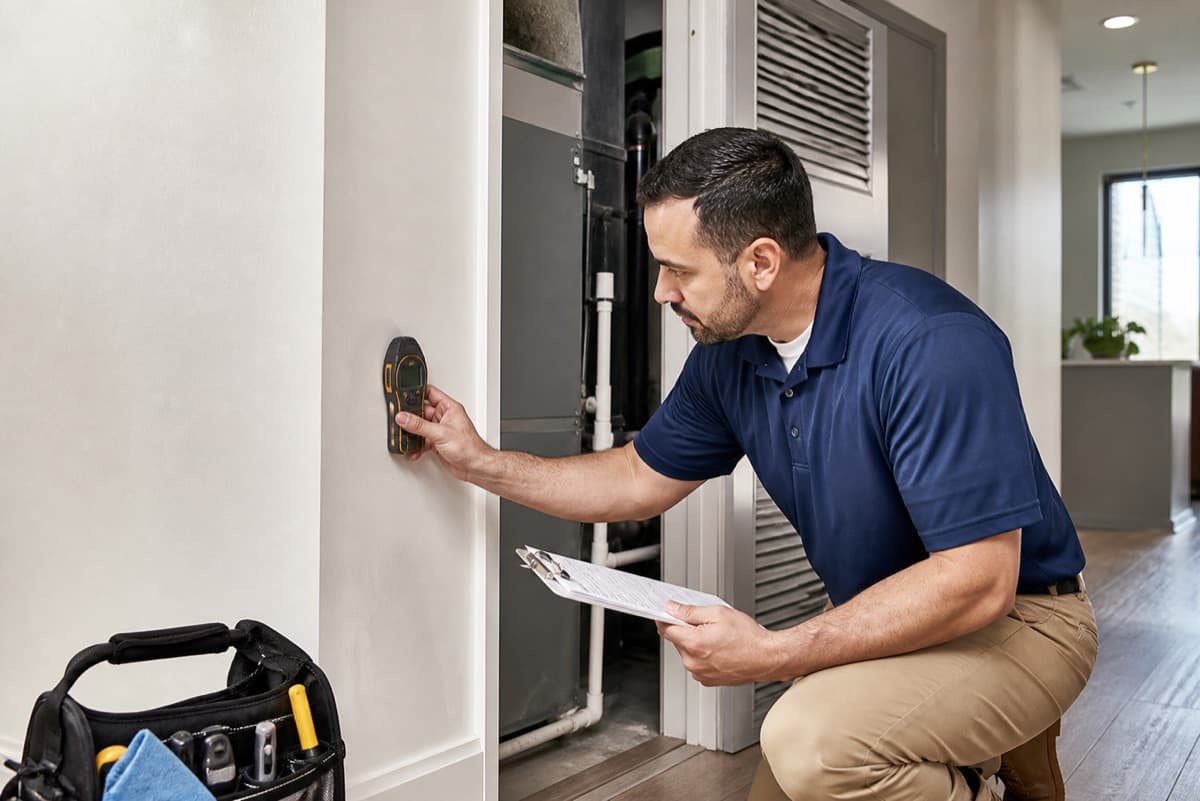
When a resident reports a musty odor, ceiling stain, or condensation around an HVAC register, the first person on site is often a maintenance technician, building engineer, leasing staff member, or property manager. That response matters. A team that understands moisture, documentation, escalation, and prevention can protect occupants, reduce complaints, and create a clearer record.
Mold awareness training for maintenance teams is not about turning every employee into a mold inspector or remediation contractor. It gives front-line staff a practical framework: recognize conditions that can support mold growth, respond safely, document what they observe, and know when a qualified professional should be brought in.
For apartments, rentals, offices, schools, hotels, and managed buildings, that framework can prevent a small moisture correction from becoming a long-running indoor air quality complaint.
Why Mold Awareness Belongs in Maintenance Training
Mold is a moisture issue before it is anything else. EPA guidance emphasizes that the key to controlling mold is controlling moisture. In property operations, moisture can come from roof leaks, plumbing failures, window flashing problems, condensation, wet materials, poor ventilation, drainage issues, or occupant activities that raise indoor humidity.
Maintenance teams are uniquely positioned to notice those conditions early. They enter units, mechanical rooms, bathrooms, laundry areas, utility closets, and common areas on a regular basis. They see patterns that may not be obvious from a single complaint: the same exterior wall affected after wind-driven rain, the same stack with plumbing issues, or the same corridor with HVAC humidity concerns.
Training helps staff connect those clues to a response process. Instead of treating each stain as isolated, a trained team asks whether there is an active water source, whether materials are still damp, whether the issue needs escalation, and what should be documented before the work order closes.
What Maintenance Teams Should Understand About Mold
Maintenance staff do not need to memorize every mold species. For most building response decisions, identifying the exact type is not the starting point. CDC guidance notes that if mold is seen or smelled, it should be removed and the moisture problem corrected. EPA also explains that indoor mold growth can be controlled by controlling moisture.
A practical awareness program should cover a few basics. Mold needs moisture to grow, and materials such as drywall, ceiling tile, wood, carpet backing, paper, and dust can support growth when moisture is present. Musty odors, recurring condensation, bubbling paint, damp carpet, soft drywall, and repeated tickets can indicate a moisture problem.
Drying speed matters, and staff should know the company’s escalation procedure for water events, including after-hours response. Not every employee should perform cleanup. Cleanup scope, worker protection, occupant sensitivity, and material condition all affect whether in-house staff should handle the task or escalate it.
Sampling is not always necessary for an initial response. Air or surface sampling may be useful in some professional inspection contexts, but it should not delay fixing the water source or addressing obvious growth. There are also no federal airborne mold threshold limits that make a building automatically safe or unsafe.
The Maintenance Workflow: From Report to Resolution
A mold awareness course should help staff follow a repeatable workflow. Exact steps should match property policies and local requirements, but most managed buildings benefit from the same core sequence.
Receive and document the report. Record who made it, when it was received, the location, the stated concern, and whether there are urgent issues such as active leaks, flooding, or affected electrical components.
Respond promptly to active water. Stop the source where possible, protect the area, and escalate repairs that require licensed trades or outside vendors. If water is still entering the building, cleanup will not solve the problem.
Observe conditions without overclaiming. Staff can document visible staining, damp materials, musty odors, condensation, humidity readings if available, and occupant statements. They should avoid unsupported conclusions such as “toxic mold” or “safe air.”
Take clear photos and tool readings. Photos should show the affected area, nearby moisture sources, wider room context, and completed repairs. Moisture or humidity readings should include location, date, and context.
Escalate based on scope and risk. Large affected areas, hidden moisture, HVAC contamination concerns, repeated complaints, reported occupant sensitivity, or uncertain conditions may require professional support.
Verify the moisture correction. A work order should not close just because a surface was wiped. The team should confirm that the leak, humidity problem, condensation driver, or ventilation issue was addressed.
Common Moisture Sources in Apartments and Commercial Buildings
Maintenance teams should recognize the building conditions most likely to create recurring mold complaints.
Plumbing leaks are a common source. Supply lines, drain lines, wax rings, water heaters, ice maker lines, washing machine connections, and tub surrounds can introduce moisture into cavities or under finishes.
HVAC and humidity issues deserve special attention. Oversized cooling equipment, clogged condensate lines, uninsulated ducts, poor air circulation, dirty coils, or improper ventilation can contribute to high humidity or condensation.
Building envelope problems can appear seasonal. Roof leaks, balcony doors, window flashing, wall penetrations, and exterior cladding defects may show up after specific weather. Bathrooms without effective exhaust, blocked vents, humidifiers, indoor drying of clothes, or furniture tight against cold exterior walls can also create localized moisture.
Documentation That Protects the Process
For property management teams, documentation is the operational record that shows what was reported, what was found, what was done, and why next steps were chosen.
Good documentation usually includes the date and time of the complaint, inspection, repair, drying, vendor visit, and follow-up; the specific location; observed conditions in plain factual language; photos; moisture or humidity readings when taken; work performed; vendors contacted; communications; and assigned follow-up. The goal is a record complete enough that a supervisor, owner, insurer, vendor, or future staff member can understand the response.
Common Mistakes and Misconceptions
One common mistake is treating visible growth as only a cleaning issue. If the moisture source remains, the problem may return. EPA guidance is clear that cleanup and moisture correction go together.
Another mistake is promising that a room is “mold-free.” Mold spores are naturally present indoors and outdoors. A better operational goal is to correct abnormal moisture, remediate affected materials appropriately, and prevent conditions that support indoor growth.
A third misconception is that every mold concern requires immediate air testing. Professional sampling can have a role, but it is not a substitute for finding water damage, correcting moisture, and documenting conditions.
Teams can also get into trouble by overstating credentials. EPA, OSHA, and CDC provide guidance, but they do not issue a general federal mold inspector license and they do not set federal airborne mold thresholds for routine building decisions. Some states and localities have mold-related rules, licensing, disclosure, or remediation requirements, so property teams should verify local requirements.
Finally, staff may underestimate communication. A tenant who reports mold may be worried about health, belongings, rent obligations, or habitability. Unclear communication can make a manageable issue worse.
How Training Helps Property and Building Teams
Mold awareness training gives staff a shared vocabulary and process. That matters when leasing agents take complaints, maintenance technicians investigate, property managers communicate with residents, and supervisors decide whether to bring in help.
Training can help teams distinguish between awareness-level tasks and professional-level inspection or remediation work. A maintenance employee may be trained to recognize moisture-prone conditions, take photos, report humidity readings, and escalate a suspected hidden leak. That is different from conducting a full mold inspection with sampling, laboratory interpretation, and a formal inspection report.
Training also supports employer documentation. A certificate of completion can show that employees received structured instruction on mold basics, prevention, health considerations, cleanup concepts, and escalation. It should not be presented as EPA certification, OSHA certification, or guaranteed professional licensure.
For larger portfolios, mold awareness training can make work orders more consistent across properties. A trained team is more likely to document the same facts, use the same escalation criteria, and communicate through the same channels.
Which moldtraining.us Course Fits This Need?
For maintenance workers, leasing staff, office staff, new hires, and seasonal employees, moldtraining.us offers Mold Prevention & Remediation Awareness Training. It is a 2-hour, self-paced online course covering mold basics, moisture sources, prevention, cleanup concepts, and escalation. Students who pass the final exam receive a certificate of completion.
For property managers, maintenance supervisors, HOA or community managers, and teams that handle tenant complaints, vendor coordination, and liability-sensitive documentation, the Property Management Mold Training course is the more focused fit. It is a 4-hour, self-paced course built around property operations, documentation, remediation, and prevention.
Professionals who plan to provide mold inspection services, interpret sampling results, or write inspector-level reports should review the Mold Inspector Certification Training course instead. That 6-hour course is aligned with IAC2 Mold Inspection Standards of Practice, but completion still means a certificate of completion, not a federal EPA or OSHA mold license.
FAQ
Do maintenance workers need mold awareness training?
Many employers and property managers choose mold awareness training because maintenance workers often see leaks, damp materials, musty odors, and tenant complaints first. Training helps them respond consistently and know when to escalate.
Is mold awareness training the same as mold inspector certification?
No. Mold awareness training is designed for recognition, prevention, documentation, and basic response. Mold inspector training is more advanced and may cover inspection scope, sampling, lab-result interpretation, and reporting.
Can a maintenance team clean mold without hiring a contractor?
It depends on size, material, cause, occupant risk, company policy, and state or local requirements. Small, straightforward cleanup may be handled in-house in some situations, but larger or uncertain conditions should be escalated.
Does OSHA or EPA certify mold inspectors?
No. EPA and OSHA provide guidance relevant to mold, moisture, indoor air quality, and worker protection, but they do not issue a general federal mold inspector certification. Training providers may issue certificates of completion, and some states or professional organizations may have their own requirements.
Should staff test the air whenever someone reports mold?
Not automatically. Air testing is not always needed to respond to visible mold or known moisture. The first priority is usually to correct the moisture source, address affected materials, and document the response.
Conclusion
Mold awareness training improves the first response to moisture problems. Staff learn what to look for, what to document, what not to overstate, and when a situation requires a supervisor or qualified professional. For maintenance teams, leasing offices, and building managers, that consistency can reduce confusion and support better outcomes.
Sources
- U.S. Environmental Protection Agency: Mold
- U.S. Environmental Protection Agency: A Brief Guide to Mold, Moisture and Your Home
- Centers for Disease Control and Prevention: Mold
- Occupational Safety and Health Administration: Mold
- International Association of Certified Indoor Air Consultants: Mold Inspection Standards of Practice