
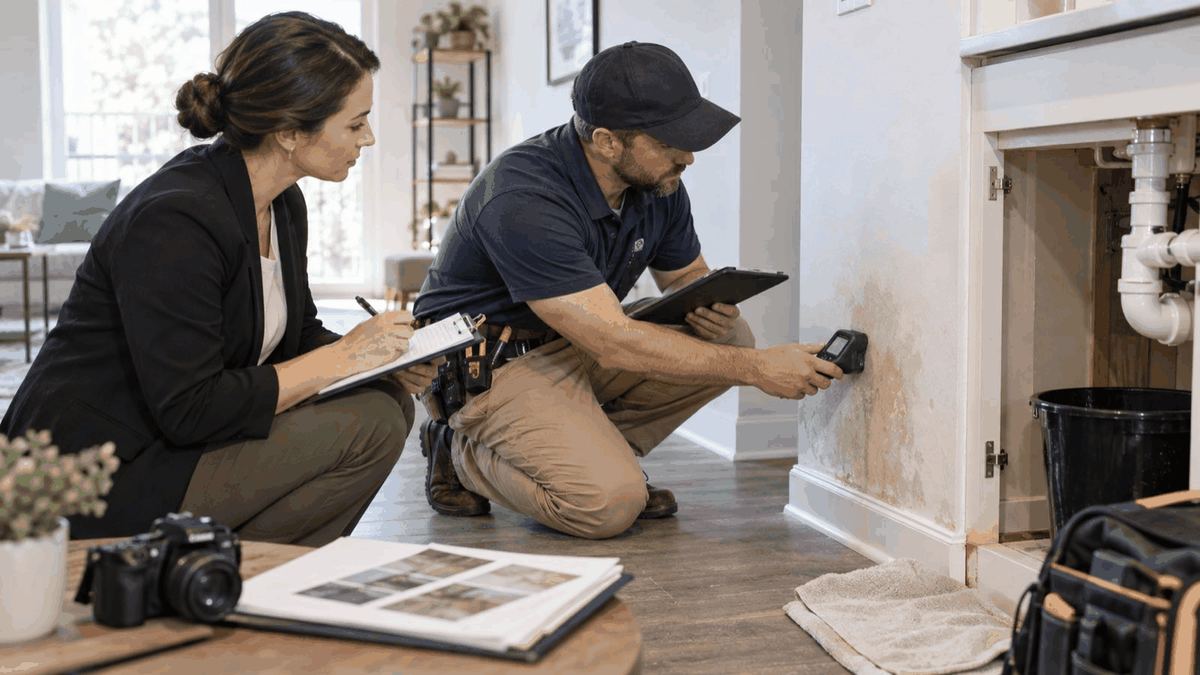
Property managers can respond to mold concerns by documenting the reported condition, moisture source, actions taken, and vendor handoff in one clear record.
A tenant complaint may begin with a small stain, musty odor, leak, condensation, or concern about indoor air quality. The property team needs to respond promptly without jumping to conclusions about cause, health effects, or the scope of remediation. Good documentation helps staff separate observed facts from assumptions, identify moisture sources, coordinate maintenance, and communicate the next step to the resident and any qualified vendor.
This workflow is not a diagnosis, remediation protocol, or legal opinion. State and local requirements may apply to mold assessment, disclosure, tenant communication, licensing, or remediation. Property teams should confirm those requirements and obtain qualified professional help when the condition is beyond routine maintenance or when the building history is unclear.
Why Documentation Matters
Mold growth is generally connected to moisture, so the first useful record is often a moisture record. A report that says “mold in bedroom” gives little information about whether there was a roof leak, plumbing failure, condensation, HVAC issue, flood, or an older unresolved condition. A dated record with photographs, locations, readings when appropriate, maintenance tickets, and communication notes gives the team a clearer starting point.
Documentation also improves handoffs. Leasing staff may receive the complaint, maintenance may inspect the area, a supervisor may approve a repair, and a remediation contractor may later evaluate materials. If each person keeps a separate partial story, the resident may have to repeat the complaint and the team may miss the connection between a repaired leak and a remaining damp building material.
EPA guidance emphasizes moisture control as a key part of mold control. That principle supports a practical workflow: find and stop the water source, protect people and property, evaluate affected materials, document decisions, and verify that the area is dry or otherwise addressed. The record should show what the property team knows, what it does not know, and who is responsible for the next action.
A Practical Complaint-to-Handoff Workflow
Start with intake. Record the date and time, reporting person, unit or area, visible symptoms of the building condition, odor, recent leaks or flooding, HVAC concerns, and any immediate access or safety issue. Do not promise a cause, an air-quality result, or a health outcome before the condition is evaluated. Use neutral language such as “reported discoloration near the window” or “visible dampness observed below the supply line.”
Next, triage the urgency. Active water, electrical contact, ceiling damage, sewage, widespread wet materials, occupants with urgent needs, or a condition that blocks safe use of the area may require immediate escalation. Isolate the source when it is safe and within staff authority. If there is a suspected utility failure, structural concern, or contamination beyond routine maintenance, contact the appropriate qualified professional or emergency resource.
During the inspection, document locations and boundaries. Take photographs that show the room context and closer views without unnecessarily recording private personal information. Note the condition of walls, ceilings, flooring, cabinets, insulation, HVAC components, and furnishings. Record whether materials are wet, stained, deteriorated, or visibly affected. A moisture meter can provide useful information when used correctly, but a reading is not a mold diagnosis and should be interpreted in context.
Look for the source and contributing conditions. Check plumbing connections, roofs, windows, exterior walls, condensate lines, drains, bathrooms, kitchens, crawl spaces, basements, and air-handling areas as appropriate. Consider condensation, humidity, poor ventilation, delayed repairs, and building-envelope failures. Do not open assemblies, move contaminated materials, or disturb suspected affected areas beyond staff training and authority.
Document immediate controls. Record whether a leak was stopped, a valve was closed, a wet material was protected, an area was isolated, ventilation was adjusted, or a work order was created. Note who performed the action and when. If drying equipment is used, record its placement, operating period, and any reason it was removed. The goal is to create a defensible timeline, not to make a technical claim the team cannot support.
The vendor handoff should include the complaint summary, inspection notes, photographs, known moisture history, actions taken, access information, and questions the property needs answered. Ask the vendor to describe the requested service clearly. Inspection, testing, cleaning, drying, and remediation are not interchangeable tasks. The property manager should understand what the vendor is being asked to evaluate and what decisions remain with the owner or qualified professional.
After the work, close the loop. Record the repair or remediation date, materials removed or retained, follow-up observations, remaining recommendations, resident communication, and the person responsible for monitoring the area. A closed work order should not imply that every question has been resolved. If the source is recurring, document the pattern and escalate it for building-level review.
Common Mistakes and Misconceptions
One mistake is treating the word “mold” in a complaint as proof of the cause, size, or health risk. Another is focusing on cleaning a visible spot while leaving the moisture source active. A third is relying on photographs without recording dates, locations, or what happened before the photograph was taken.
Property teams should also avoid promising that an occupant will have no health effects or that a building is completely mold-free. Avoid presenting a certificate of completion as a license or as proof that staff can perform every inspection or remediation task. Training supports awareness, documentation, communication, and safer escalation, while complex conditions may require qualified professionals and local compliance review.
Do not skip the vendor handoff because the issue appears small. A clear record helps a vendor avoid repeating basic discovery work and gives the property a way to compare the reported condition with the completed work. It also helps identify whether multiple complaints point to a common building-envelope, HVAC, or maintenance problem.
How Training Helps
Mold Prevention and Remediation Awareness Training can help general staff, maintenance workers, leasing teams, and employers recognize moisture conditions, protect occupants and property, document observations, and escalate work within their role. Property Management Mold Training is a better fit for teams that coordinate complaints, work orders, vendors, resident communication, and follow-up records.
Mold Inspector Certification Training may be relevant to professionals who intend to provide inspection services and need deeper, standards-aligned education. It does not by itself create guaranteed third-party licensure, and state or local requirements must be checked. The appropriate course depends on the person’s duties, building type, and the decisions they are expected to make.
For a property team, a useful training conversation asks who receives complaints, who investigates moisture, who approves vendor work, who communicates with residents, and who reviews recurring patterns. The goal is a consistent workflow with certificates of completion supporting the training record, not a claim that training alone guarantees a particular result.
Frequently Asked Questions
Should a property manager promise that a complaint is mold?
No. Record the resident’s report and the observed condition separately. Use neutral descriptions until the source and affected materials are evaluated, and explain the next action without promising a diagnosis or health outcome.
What should be photographed?
Photograph the room context, the affected location, nearby moisture sources, and relevant building components, while protecting private information. Add dates, locations, and notes explaining what each image shows.
Is a moisture-meter reading enough to make a decision?
No. A reading can add useful context when the instrument is used properly, but it does not identify mold or establish the full extent of a condition. Interpret it with building history, visible observations, and qualified evaluation when needed.
When should a vendor be involved?
Bring in a qualified vendor or professional when the source is unclear, the area is extensive, materials are significantly wet or damaged, contamination may involve sewage or other hazards, the issue is recurring, or local requirements call for specialized services.
Which moldtraining.us course fits property staff?
Property Management Mold Training is designed for teams handling tenant complaints, moisture issues, documentation, and vendor coordination. Awareness Training may fit general staff and maintenance teams, while Inspector Certification Training serves professionals pursuing inspection work.
Conclusion
A consistent mold documentation workflow starts with neutral intake, timely moisture control, clear observations, careful escalation, and a complete vendor handoff. Property teams can use training to build that routine, recognize the limits of their role, and respond to residents with practical next steps.