
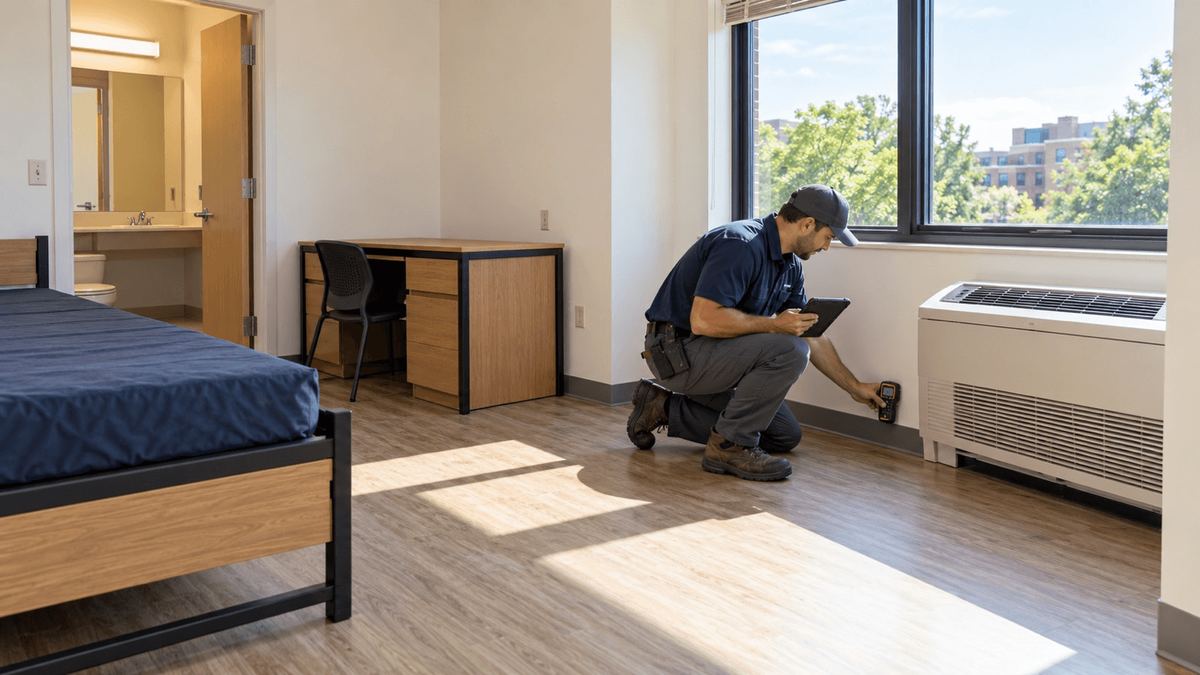
Student housing can develop hidden moisture during breaks and turnovers, when fewer occupants are present and routine observations may temporarily stop. A vacant room is not automatically a low-risk room. Closed windows, reduced airflow, plumbing leaks, roof problems, condensate issues, wet cleaning, and delayed work orders can allow damp materials to remain unnoticed until residents return.
Property teams can reduce this gap by building moisture checks into move-out, break, maintenance, and move-in workflows. The goal is to recognize water early, document findings, correct the source, involve qualified help when appropriate, and verify that the space is ready for its next use.
Why Student Housing Needs a Break-Period Moisture Plan
Student housing combines dense occupancy, frequent turnover, shared plumbing, varied housekeeping habits, and buildings that may include several construction eras. During the academic term, residents often report active leaks, odors, condensation, or comfort problems. During breaks, those everyday observers may be absent while building systems continue operating.
Turnover work can create both opportunities and blind spots. Staff can see areas normally blocked by beds, desks, storage, and rugs. At the same time, compressed schedules may encourage quick painting, flooring replacement, or furniture installation before the cause of staining or dampness is understood. Covering a symptom without correcting moisture can hide a recurring problem from the next resident.
Vacancy conditions also vary. Some rooms remain conditioned normally, some are placed in energy-saving modes, and others are affected by open windows, closed doors, fan shutdowns, or thermostat changes. Exterior humidity, cold surfaces, roof drainage, pipe temperature, and ventilation all influence condensation. A single humidity reading does not explain every moisture condition, but trends and visible signs can guide investigation.
Student housing includes more than bedrooms. Bathrooms, kitchens, laundry rooms, mechanical closets, storage areas, roofs, basements, and exterior walls can contribute water or humid air. A good route includes common systems and paths water may travel between rooms.
Building a Practical Inspection Route
Begin with known history. Review leak reports, resident complaints, plumbing repairs, roof work, HVAC service, condensation calls, and rooms with repeated staining or odor. A risk-based route can prioritize these locations while still giving each turnover space a consistent basic check.
Bedrooms and living areas
Look behind and beneath furniture, along exterior walls, near windows, around fan-coil or packaged terminal units, at baseboards, and beneath sinks where present. Note staining, peeling coatings, swollen trim, soft materials, condensation, musty odors, or signs that furniture blocked airflow. Do not rely on appearance alone to determine the cause.
Bathrooms and shared kitchens
Inspect supply and drain connections, toilet bases, shower surrounds, exhaust operation, cabinets, ceilings below known plumbing, refrigerator lines, dish areas, and floor transitions. Check whether sealants, fixtures, and finishes show damage that could allow repeated wetting. Confirm that work orders distinguish the source repair from cosmetic restoration.
HVAC and condensate points
Check accessible condensate pans, drains, insulation, filters, supply areas, and surrounding finishes according to site procedures. Water at or near cooling equipment may come from blocked drainage, damaged insulation, air leakage, or another cause that requires qualified HVAC evaluation. Staff should not open energized equipment or enter restricted mechanical spaces without authorization and training.
Roof, envelope, and drainage clues
Review top-floor rooms, window perimeters, parapets, exterior penetrations, roof-drain areas, and walls with prior leakage. Inspect after storms when practical. A stain may be dry during the turnover visit but still identify a route that becomes active in wind-driven rain.
Storage and support areas
Inspect custodial closets, linen storage, basement rooms, laundry areas, and spaces where wet materials or equipment may be left. Cardboard, textiles, ceiling tile, and gypsum products can conceal moisture or sustain damage. Keep storage off known wet surfaces and maintain access for inspection.
A Break and Turnover Workflow
Assign the first check soon after move-out, before deep cleaning or repair hides evidence. Record the room, date, observer, conditions, visible findings, resident report history, and photographs according to policy. If water is active, protect people and property, stop the source when staff are authorized to do so, and escalate promptly.
Map affected materials rather than documenting only the most visible spot. Water can travel behind baseboards, under flooring, through wall cavities, and between levels. The response should consider source, duration, material, extent, contamination category, electrical conditions, and occupant concerns. Qualified assessment may be needed when the extent is unclear or concealed.
Separate tasks in the work order. One task may stop a plumbing leak, another may remove damaged material, another may dry the area, and another may restore finishes. Closing the entire issue when only the source repair is complete can leave wet materials behind. Likewise, painting a stain should not serve as evidence that the area is dry.
Verification should occur before furniture returns. Confirm that the source was corrected, affected materials were evaluated, appropriate drying or remediation was completed, and damaged finishes were restored. Use measurements only within the user's training and manufacturer instructions. Compare readings with suitable reference locations and material characteristics rather than treating one number as a universal threshold.
The move-in check should include a brief visual review and clear reporting information for residents. Tell students how to report leaks, condensation, odors, or water damage and where emergency requests go after hours. Avoid asking residents to inspect unsafe or inaccessible areas. Fast reporting works only when the response channel is easy to use and staff act on the information.
Common Mistakes and Misconceptions
An empty room cannot have a moisture problem
Plumbing, roofs, HVAC systems, exterior humidity, and adjacent spaces continue to affect vacant rooms. Reduced observation can make vacancy a higher detection risk.
A stain that feels dry is resolved
A dry surface does not prove the source was corrected or concealed materials are dry. Review history, inspect adjacent materials, and verify the repair.
Painting is a moisture-control step
Coatings may restore appearance after the underlying issue is addressed. They do not stop an active leak, repair a drain, dry a wall cavity, or replace damaged material.
Every spot requires the same response
Response depends on source, extent, material, contamination, accessibility, and applicable requirements. Staff should know when a routine maintenance response is insufficient.
One indoor humidity value proves there is no risk
Humidity readings are useful context, but local cold surfaces, hidden leaks, airflow restrictions, and material moisture can differ from the room average.
Bleach is a universal mold solution
A product choice does not replace moisture correction, material evaluation, safe work practices, and appropriate containment. Follow product labels and qualified guidance.
Training creates a mold license
Training provides knowledge and a certificate of completion. It does not guarantee licensure or authorize work regulated by a state or locality. Check current state and local requirements for the role and project location.
How Training Helps
Training gives housing staff shared language for moisture, condensation, material damage, documentation, and escalation. A resident assistant may need awareness and reporting skills. Maintenance staff need a stronger understanding of inspection routes, source control, work-order detail, drying coordination, and safe limits. Property managers need to connect complaints, vendor work, resident communication, and records.
The Property Management Mold Training course at moldtraining.us is relevant for residence-life managers, facilities coordinators, and maintenance teams that handle moisture reports and vendor handoffs. The Mold Awareness Training course may fit front-desk staff, resident assistants, and other employees who need to recognize and report concerns without performing inspections or remediation. Employers should choose training that matches actual duties.
Courses provide certificates of completion. They do not guarantee licensure, replace employer procedures, or authorize employees to perform regulated assessment or remediation. Requirements vary, so organizations should check state and local rules and use qualified professionals where the scope, contamination, health concerns, or law calls for them.
Training is most useful when paired with practice. Walk the route, review sample photos, complete a model work order, and rehearse escalation for an active leak. Supervisors can audit whether staff distinguish source correction, drying, restoration, and closeout instead of recording all work as one task.
A soft next step is to compare the site's break and turnover checklist with the roles of the people using it, then select the moldtraining.us course that fits each role. The aim is a consistent response from the first observation through repair verification, not a certificate stored without a field process.
Frequently Asked Questions
When should break-period inspections occur?
Use a schedule based on building history, season, occupancy, staffing, and site procedures. Useful checkpoints may include soon after move-out, after major cleaning, after repairs, following severe weather, before furniture reset, and before move-in. Active leaks or alarms require prompt response rather than waiting for the next route.
Should staff enter every vacant room after a storm?
Prioritize locations based on roof and envelope history, storm direction, alarms, known defects, and prior complaints while following access policies. A broader check may be appropriate after significant events. Document the basis for the route and any rooms that could not be accessed.
Can resident assistants perform moisture inspections?
Their role should match employer training and policy. Resident assistants can often report visible water, odors, or damage and direct students to the proper channel. Technical inspection, electrical access, intrusive work, and remediation should be assigned to qualified personnel.
Does a musty odor confirm mold?
An odor is a reason to investigate, not a complete diagnosis. Review moisture sources, materials, ventilation, and adjacent spaces. Avoid making health or contamination conclusions without appropriate evaluation.
When should outside help be considered?
Consider qualified help when growth is suspected across a larger or concealed area, contaminated water is involved, the source is unclear, repeated repairs fail, occupant health concerns arise, specialized containment is needed, or state and local rules require licensed services.
How should records follow a room between terms?
Use the organization's retention and privacy policies. Preserve enough information to show the location, source, affected materials, actions, responsible parties, verification, and recurring history. Limit unnecessary personal or health information and control access appropriately.
Conclusion
Student housing moisture prevention depends on observation during the quiet periods when residents are not present to report problems. A structured route can connect bedrooms, bathrooms, HVAC points, common areas, roofs, plumbing, and support spaces. A clear workflow can keep source repair, drying, material decisions, restoration, and verification from being collapsed into one incomplete work order.
Training helps staff recognize conditions and communicate consistently, but it works only with authority, access, qualified support, and reliable closeout. Before the next break or turnover cycle, review the highest-risk rooms, identify who checks each area, and confirm how findings move from observation to verified completion.