
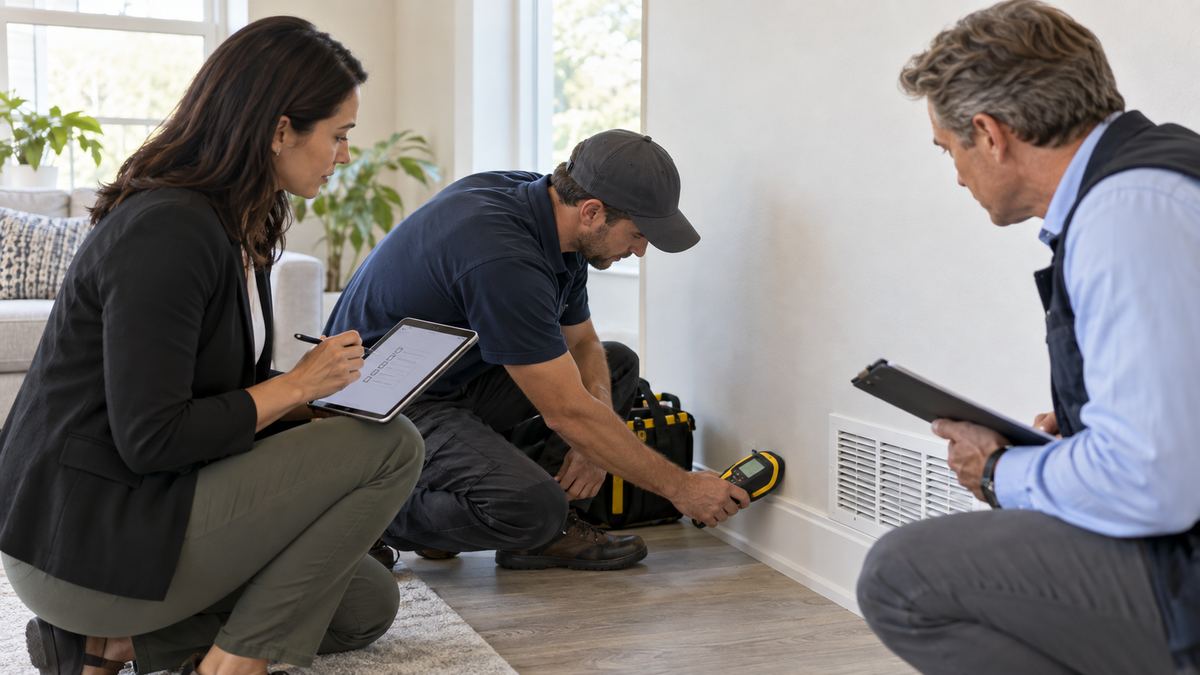
Building engineers and facility maintenance teams are often the first people asked to respond when an office, school, hotel, warehouse, or commercial building has a musty odor, visible staining, condensation, or recurring moisture. The response may start as an HVAC ticket, a roof leak report, a restroom issue, a tenant complaint, or a housekeeping concern. In each case, the team needs a practical process that focuses on moisture control, documentation, and appropriate escalation.
The goal of mold training is not to turn every building engineer into a mold consultant. It is to help the people closest to daily building operations recognize moisture clues, avoid unsupported claims, document what they see, and coordinate the right next step. Moldtraining.us offers practical online training options with certificates of completion for teams that need a consistent baseline across maintenance, management, inspection, and response roles.
Why Building Engineers Need Mold Awareness
Commercial buildings create moisture challenges in many ways. Air conditioning systems can produce condensation if drainage, insulation, or airflow is poor. Roof penetrations can leak during wind-driven rain. Plumbing chases can hide slow leaks. Exterior walls can trap moisture behind finishes. Restrooms, kitchens, locker rooms, mechanical rooms, and storage areas may have humidity or ventilation concerns. A staff member who understands these patterns can respond more thoughtfully than someone who only sees a stain.
Mold awareness also helps teams communicate clearly. Occupants may use the word mold for many conditions, including dust, mildew-like growth, water stains, old adhesive, dirt, or discoloration. Maintenance personnel should take the report seriously while avoiding conclusions that require further evaluation. Training helps workers say what they observed, what moisture source was checked, what action was taken, and when the issue was escalated.
For employers, training supports consistency. A facility with several shifts or multiple properties may have different technicians responding to similar issues. One person may document humidity and condensate drain conditions. Another may simply write cleaned wall. A training program gives the team shared expectations so work orders, photos, vendor notes, and follow-up steps are easier to compare.
What Maintenance Teams Should Check
The first check should be whether there is active water. Active leaks, standing water, wet ceiling materials, saturated carpet, or damp wallboard require prompt response according to company policy. A moisture meter, thermal imaging, HVAC inspection, plumbing review, or roof assessment may be appropriate depending on the situation and staff qualifications. If conditions are outside the maintenance team's role, the issue should move to a qualified vendor.
The next check is location and pattern. Moisture on a ceiling tile below a roof drain suggests a different path than moisture on a wall next to an air diffuser. A musty odor limited to a mechanical room may point to condensate, insulation, drain pans, or stored materials. Repeated complaints in the same tenant suite may call for a broader review of humidity, ventilation, envelope conditions, or housekeeping practices.
Documentation should focus on facts. Useful notes may include visible staining, measured moisture where taken by trained staff, relative humidity if measured, HVAC conditions, condensate drain status, recent weather, plumbing findings, affected materials, odor observations, and photos if permitted. Staff should avoid writing toxic mold, harmless mold, certified mold free, or safe to occupy unless an appropriately qualified professional has made a determination within their scope.
Common Mistakes and Misconceptions
One common mistake is cleaning visible growth or staining without finding the moisture source. If the cause is a roof leak, condensate issue, plumbing failure, exterior drainage problem, or humidity imbalance, the concern may return. Mold awareness training should reinforce the simple principle that moisture control comes first.
Another mistake is making broad health, safety, or certification claims. EPA, OSHA, and CDC provide guidance related to mold and moisture, but they do not certify mold inspectors or set one federal airborne mold threshold for routine building operations. Some states and localities have their own rules, and employers should verify requirements where they operate. Training should help staff understand those limits so they do not overpromise.
A third mistake is treating HVAC comfort complaints and moisture complaints as unrelated. Temperature, relative humidity, ventilation, condensation, and drainage are connected. Building engineers are in a strong position to recognize those connections, especially when a complaint repeats in certain seasons, rooms, or operating conditions.
Connecting Complaints to Training Needs
Mold Prevention and Remediation Awareness Training is a strong fit for maintenance workers, building engineers, housekeeping supervisors, facility coordinators, and managers who need basic mold and moisture knowledge. It can help teams recognize common conditions, document observations, avoid unsupported statements, and understand when to escalate to a qualified professional.
Property Management Mold Training may fit managers who handle tenant communication, vendor coordination, work order review, documentation, and owner reporting. It is especially useful where commercial property management teams need a workflow that connects maintenance action to communication and records.
Mold Inspector Certification Training is better suited for people who want to perform inspection services, such as home inspectors, remediation contractors, environmental consultants, and real estate professionals adding mold-related services. Moldtraining.us describes this option as IAC2-aligned. Students should still verify state licensing, insurance, association, and business requirements that apply to their work.
Practical Commercial Building Workflow
- Record the report, location, timing, occupant concern, odor description, visible condition, and whether active water is present.
- Inspect for obvious moisture sources within the maintenance team's role, including HVAC condensate, plumbing, roof, exterior wall, and humidity clues.
- Assign inspection or maintenance follow-up according to company policy and urgency.
- Record observable conditions, measurements taken by trained staff, photos when allowed, and repairs completed.
- Dry or remove wet materials according to company policy and the scope of the issue.
- Escalate to qualified vendors for mold inspection, remediation, HVAC service, roofing, plumbing, or environmental review when needed.
- Follow up with the occupant or tenant contact and document completion, vendor findings, and prevention steps.
This workflow helps teams avoid two extremes: dismissing concerns too quickly or overreacting with unsupported claims. It keeps the focus on moisture control, observable facts, communication, and appropriate expertise.
Soft CTA
For facility teams that want a consistent baseline, Moldtraining.us offers online, self-paced training options with certificates of completion. Mold Prevention and Remediation Awareness Training can support building engineers, maintenance teams, and facility staff. Property Management Mold Training can help managers connect moisture response to documentation and communication. Mold Inspector Certification Training is designed for professionals who want deeper inspection-focused education.
FAQ
Should building engineers identify the mold species?
Usually no. Building engineers should document observable conditions and coordinate qualified help when needed. Species identification, sampling, and interpretation should be handled by appropriately qualified professionals when the situation calls for it.
Does EPA certify mold inspectors?
No. EPA provides mold and moisture guidance, but it does not certify mold inspectors. Training can provide a certificate of completion or align with professional standards, but students should verify state and local requirements.
Is every commercial mold concern a remediation project?
No. Some concerns involve condensation, old staining, leaks, humidity, HVAC issues, housekeeping, or conditions that need further evaluation. The first step is documentation and moisture-source review.
What course fits maintenance and facility staff?
Mold Prevention and Remediation Awareness Training can help general facility staff understand basics. Property Management Mold Training is better for managers who handle tenant communication, work orders, documentation, and vendor coordination.
Can online training replace site-specific procedures?
No. Online training supports baseline knowledge and documentation, but employers should also provide company procedures, local requirements, vendor rules, and site-specific response steps.
Conclusion
Commercial mold concerns are easier to manage when building engineers know what to document, what not to claim, and when to escalate. A practical training program helps staff respond consistently, protect the record, and focus on the real driver behind most mold concerns: moisture. Moldtraining.us can help facility and property teams build that baseline with role-focused online courses and certificates of completion.
Sources
EPA Mold Resources
CDC Basic Facts About Mold and Dampness
https://www.cdc.gov/mold-health/about/
OSHA Safety and Health Topics Mold
IAC2 Mold Inspection Standards of Practice